
Human populations become well-established across North America …
Years: 11277BCE - 9550BCE
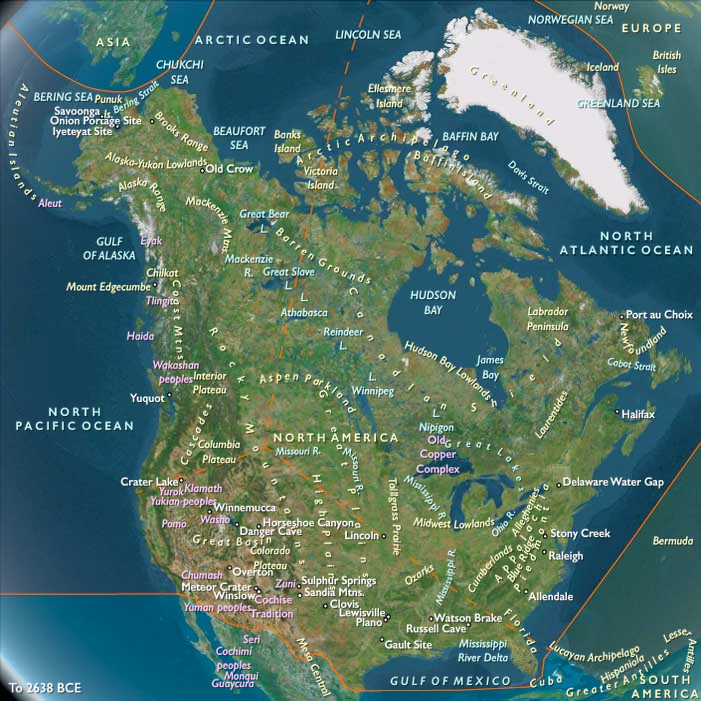
Human populations become well-established across North America as the Last Glacial Maximum ends and ice sheets retreat. The Clovis culture emerges around 11,000 BCE, characterized by distinctive fluted spear points and sophisticated hunting techniques targeting megafauna including mammoths, mastodons, and giant bison. These highly mobile hunter-gatherers spread rapidly from Alaska through ice-free corridors and along deglaciated coastlines, reaching as far south as Chile by 10,500 BCE.
Archaeological sites from this period show evidence of organized hunting camps, specialized stone tool technologies, and the exploitation of diverse environments from tundra to temperate forests. The retreat of continental ice sheets opens new territories and migration routes, enabling rapid population expansion across the continent. Some megafaunal species begin showing signs of decline, possibly due to climate change, hunting pressure, or both.
While this period sees the clearest widespread evidence of human occupation, earlier sites like White Sands suggest human presence in North America may extend back over 20,000 years.
Locations
Groups
Topics
- Pleistocene Epoch
- The Upper Paleolithic
- Allerød Oscillation
- Late Glacial Maximum
- Younger Dryas
- Neolithic Revolution
- Preboreal Period
Commodoties
Subjects
Regions
Subregions

Years: 11277BCE - 9550BCE
Locations
Groups
Topics
- Pleistocene Epoch
- The Upper Paleolithic
- Allerød Oscillation
- Late Glacial Maximum
- Younger Dryas
- Neolithic Revolution
- Preboreal Period
Commodoties
Subjects
Regions
Subregions