
Hawaiʻiloa, a Polynesian chief, is said to …
Years: 448 - 459
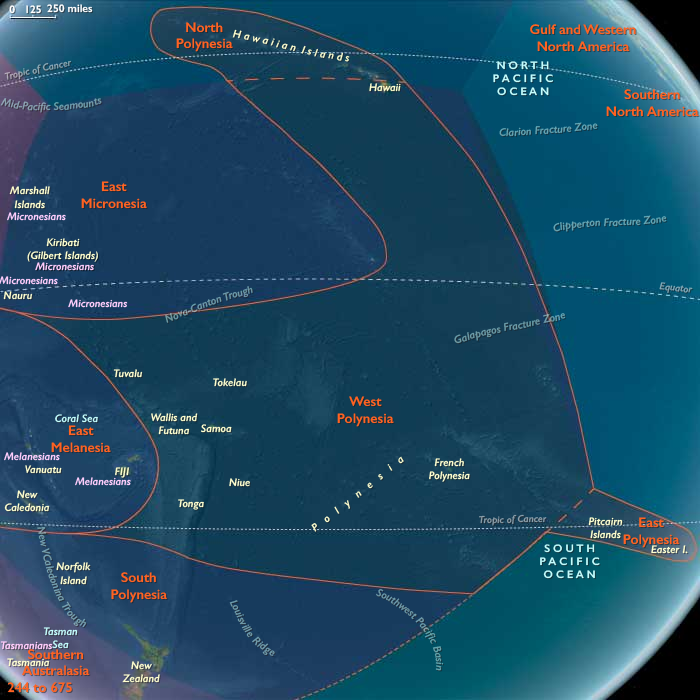
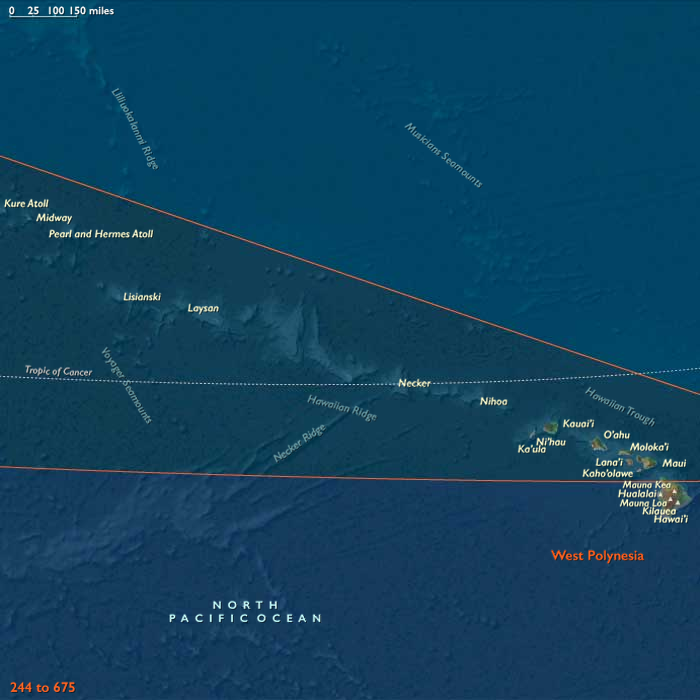
Hawaiʻiloa, a Polynesian chief, is said to have discovered what will be called the Hawaiian Islands, according to one legend, sailing across twenty-four hundred miles of open water from the island of Raiatea, near Tahiti.
He settles on Hawaii, named in his honor.
The story of Hawaiʻiloa is attested, however, only by such late sources as the antiquarians Abraham Fornander and Thomas George Thrum.
As they did not give their original Hawaiian sources, but only digests and compilations, we cannot be sure that the tale has not been slanted towards proof of Fornander's now discredited migration theories, or that it has not been elaborated by nineteenth-century Hawaiians eager to stress the validity of their own beliefs.
Hawaiʻiloa is not mentioned in early Hawaiian sources like David Malo or Samuel Kamakau.
Malo says that there are many stories of the origin of the Hawaiians, and cites some migration tales, some legends of indigenous origin.
He does not mention Hawaiʻiloa.
Kamakau says that the first man and woman were Hulihonua and Keakahuilani, and that they were created on Oʻahu.
Locations
Topics
Subjects
Regions
Subregions
Years: 448 - 459
Locations
Topics
Subjects
Regions
Subregions