
The Sixth-Century Plague and Celestial Omens in …
Years: 556 - 567
The Sixth-Century Plague and Celestial Omens in the Frankish Kingdom
The sixth-century pandemic, known as the Plague of Justinian (541–542 CE), is estimated to have killed around 100 million people across Asia, Europe, and the Middle East throughout its multiple waves. This devastating outbreak of bubonic plague weakens civilizations from the Byzantine Empire to the Frankish Kingdom, leading to economic collapse, population decline, and political instability.
1. The Plague of Justinian: A Global Catastrophe
- Caused by Yersinia pestis, the pandemic originates in Central Asia and spreads via trade routes, particularly through Egypt and Constantinople before reaching Western Europe.
- The plague devastates urban centers, leading to mass death and famine as agricultural systems collapse.
- Emperor Justinian I, ruler of the Eastern Roman Empire, contracts the disease but survives; however, the empire never fully recovers from the population and economic decline.
2. The Plague Reaches the Frankish Kingdom
-
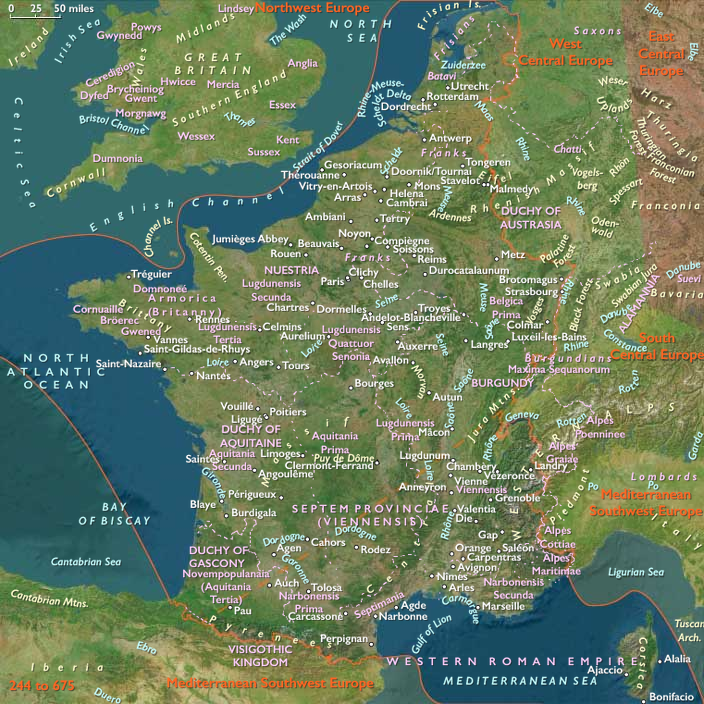
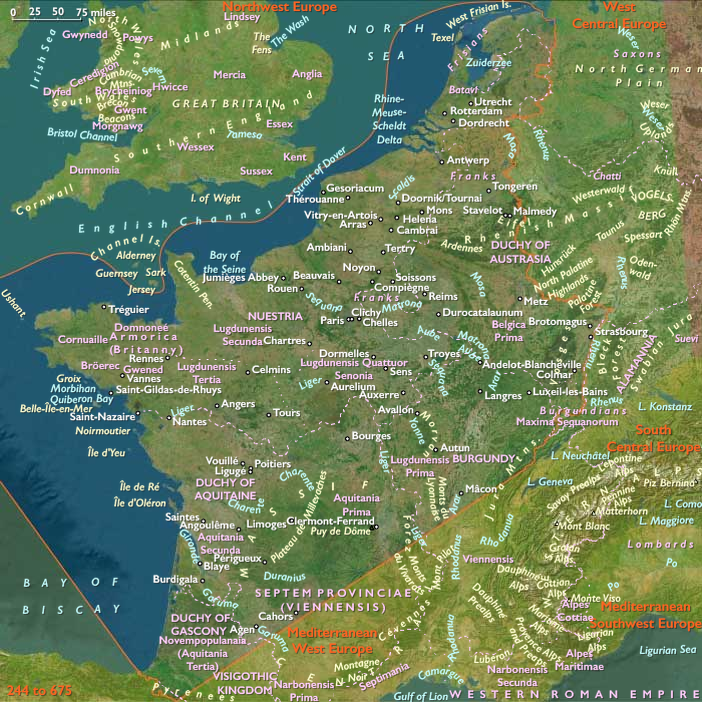
By the mid-sixth century, the plague spreads to Gaul (modern France), including the region of Auvergne.
-
Gregory of Tours, the leading Frankish historian and bishop, records the catastrophe in his Historia Francorum (History of the Franks).
-
According to his account, just before the plague swept through Auvergne, a strange celestial phenomenonoccurred:
"Three brilliant lights appeared around the sun, and the heavens appeared to be on fire."
-
Such celestial signs were often interpreted as omens of divine wrath or impending disaster, reinforcing contemporary fears of an apocalyptic event.
3. The Impact on the Frankish Kingdom
- The plague ravages Merovingian Gaul, causing widespread mortality and social disruption.
- Cities and rural areas suffer severe depopulation, weakening Frankish political structures.
- The high mortality among clergy and aristocracy leads to power struggles and dynastic instability.
- The outbreak exacerbates food shortages and economic turmoil, making it more difficult for Merovingian rulers to maintain stability.
4. The Plague and the Medieval World
- The Justinianic Plague is one of the earliest recorded pandemics, prefiguring later outbreaks like the Black Death (1347–1351 CE).
- The pandemic contributes to the long-term weakening of urban centers, further shifting medieval European society toward feudalism and localized economies.
- Religious and apocalyptic interpretations of the plague reinforce the power of the Catholic Church, as people seek divine protection and explanations.
Conclusion: A Pandemic That Shaped History
The sixth-century plague, which killed an estimated 100 million people, left a lasting impact on the Frankish world and the broader medieval period. The ominous celestial signs described by Gregory of Tours underscore how medieval societies viewed natural disasters as divine portents, influencing religious thought, political decisions, and societal transformations in the centuries to come.
Locations
People
Groups
Topics
Subjects
Regions
Subregions
Years: 556 - 567
Locations
People
Groups
Topics
Subjects
Regions
Subregions