
Thespis of Icaria (present-day Dionysos, Greece) is …
Years: 537BCE - 526BCE
Thespis of Icaria (present-day Dionysos, Greece) is the first person ever to appear on stage as an actor playing a character in a play (instead of speaking as him or herself), according to certain Ancient Greek sources and especially Aristotle.
In other sources, he is said to have introduced the first principal actor in addition to the chorus.
According to Aristotle, writing nearly two centuries later, Thespis, a singer of dithyrambs (songs about stories from mythology with choric refrains), supposedly introduced a new style in which one singer or actor performed the words of individual characters in the stories, distinguishing between the characters with the aid of different masks.
This new style is called tragedy, and Thespis is the most popular exponent of it.
Athenians institute a contest in tragedy at a festival held in honor of Dionysus, the god of wine, fertility, and revelry.
Thespis, the inventor of the new form, wins the first documented competition in 537.
Capitalizing on his success, Thespis also invents theatrical touring: he tours various cities while carrying his costumes, masks and other props in a horse-drawn wagon.
It is implied that Thespis invented acting in the Western world, and that prior to his performances, no one had ever assumed the resemblance of another person for the purpose of storytelling.
In fact, Thespis is the first known actor in written plays.
He may thus have had a substantial role in changing the way stories were said and inventing theater as we know it today.
In reverence to Thespis, actors throughout western history have been referred to as thespians.
Red-figure vase painting, one of the most important styles of figural Greek vase painting, develops in Athens around 530 BCE; replacing the previously dominant style of Black-figure vase painting within a few decade, sit will remain in use until the late third century BCE.
Its modern name is based on the figural depictions in red color on a black background, in contrast to the preceding black-figure style with black figures on a red background.
Details are painted rather than incised on the light ground, giving painters greater freedom to perfect their rendering of anatomy and perspective.
The most important areas of production, apart from Attica, are in Southern Italy.
The style is also adopted in other parts of Greece.
Etruria becomes an important center of production outside the Greek World.
Athenian industry and commerce expand tremendously in the latter half of the sixth century; the main contribution of Peisistratid rule to these developments is probably the guarantee of internal tranquility and the protection of foreign immigrants.
Externally, the tyrant pursues a policy of peace, probably because he dares not allow the Athenian citizenry to bear arms in a major war, but at this time, the Greek world is also in a temporary state of balance.
In the Aegean, Peisistratus has helped such friends as Lygdamis of Naxos to become local tyrants.
He has purified the sacred island of Delos by removing the old graves near its temple of Apollo.
His main efforts, however, are concentrated in gaining control of the Hellespont, through which comes the exported grain of south Russia.
To this end, he secures command of Sigeum and installs a younger son, Hegesistratus, as its ruler.
Of greater importance is his encouragement of the Athenian Miltiades in leading a private venture that gains mastery over Chersonesus (near modern Sevastopol, Ukraine).
Peisistratus remains in power until his death in 527, when his sons Hippias and Hipparchus succeed him as co-tyrants.
Locations
People
Groups
Topics
Commodoties
Subjects
- Origins
- Commerce
- Writing
- Sculpture
- Painting and Drawing
- Performing Arts
- Environment
- Labor and Service
- Conflict
- Faith
- Government
- Technology
Regions
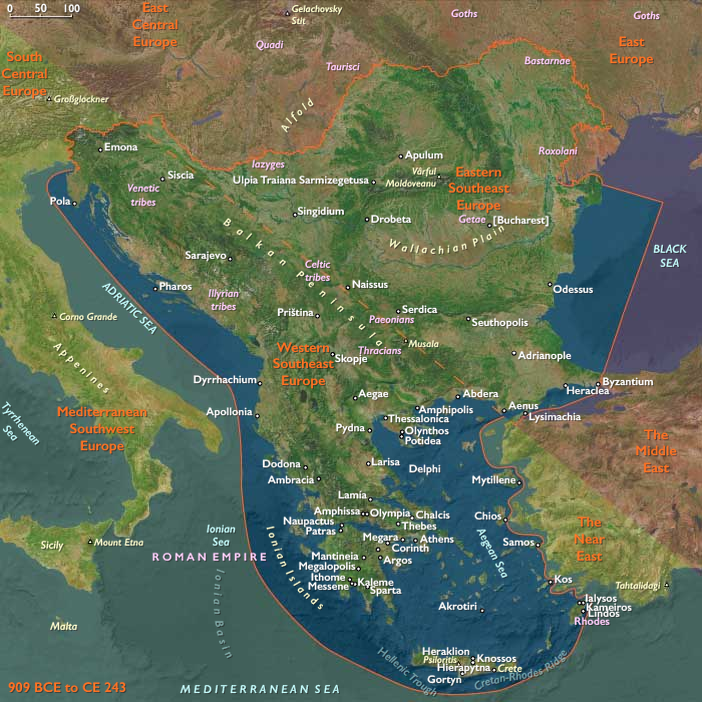
Subregions
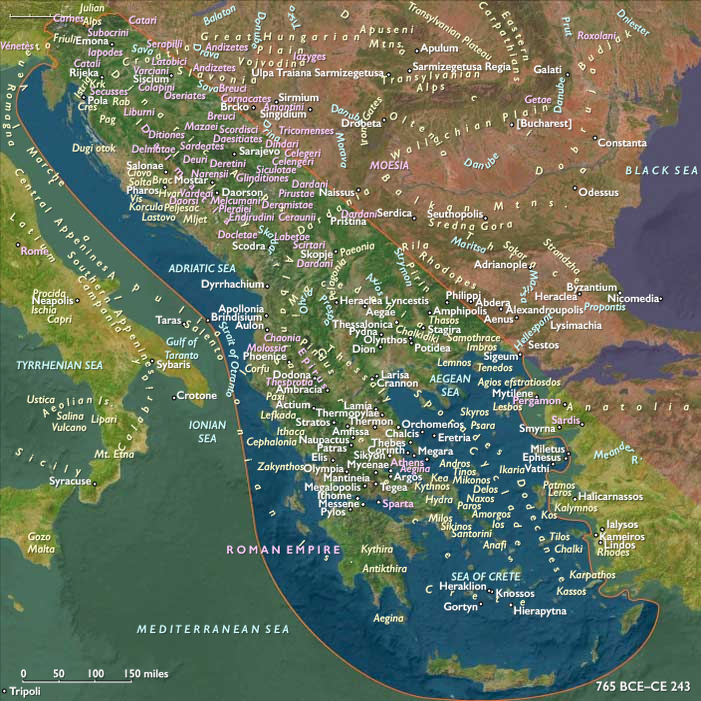
Related Events
Showing 10 events out of 65787 total
Years: 537BCE - 526BCE
Locations
People
Groups
Topics
Commodoties
Subjects
- Origins
- Commerce
- Writing
- Sculpture
- Painting and Drawing
- Performing Arts
- Environment
- Labor and Service
- Conflict
- Faith
- Government
- Technology
Regions
Subregions