
Southern Australasia (2637 – 910 BCE): Southern …
Years: 2637BCE - 910BCE
Southern Australasia (2637 – 910 BCE): Southern Lands of Long Continuity
Geographic and Environmental Context
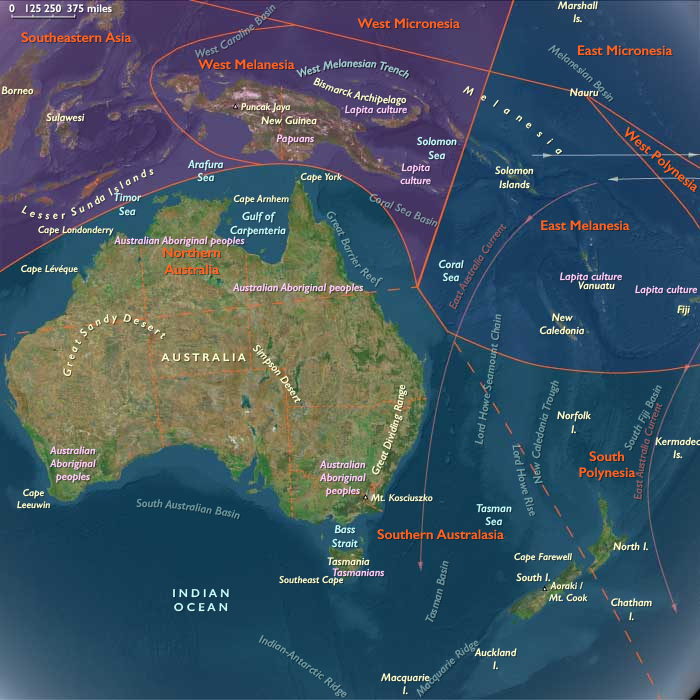
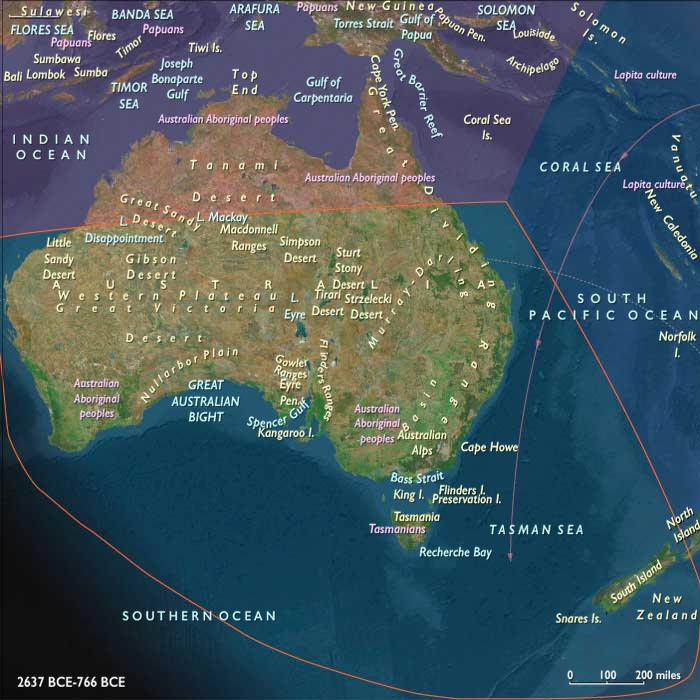
Southern Australasia—including southern Australia (New South Wales, Victoria, South Australia, southern Western Australia, and Tasmania) and the temperate regions of New Zealand’s North and South Islands—was marked by diverse landscapes: eucalyptus forests, grasslands, coastal estuaries, alpine highlands, and extensive river systems such as the Murray–Darling Basin. Tasmania’s cooler, wetter climate supported temperate rainforests in the west, while New Zealand’s high mountains and fertile lowlands remained uninhabited in this period.
Subsistence and Settlement
By the mid–third millennium BCE:
-
Aboriginal Australians in the south practiced seasonal mobility, moving between coastal, riverine, and inland zones according to food availability.
-
Subsistence relied on hunting kangaroos, wallabies, and emus; fishing; shellfish collection; and gathering of tubers, seeds, and nuts.
-
In Tasmania, communities adapted to colder winters with specialized clothing, fires, and reliance on seals, shellfish, and terrestrial game.
-
New Zealand remained untouched by humans, though it possessed rich forests, bird life, and fisheries that would later support Polynesian settlement.
Technological and Cultural Developments
-
Stone tools included ground-edge axes, scrapers, and microlithic points, made from locally sourced and traded stone.
-
Wooden implements—spears, clubs, digging sticks—were shaped and hardened in fire, often decorated with ochre.
-
Fishing technologies varied from stone-walled fish traps in estuaries to spears, lines, and woven nets.
-
Canoes, rafts, and bark boats were used on rivers, lakes, and sheltered coastal waters.
Cultural and Symbolic Expressions
-
Rock art sites in southern Australia and Tasmania depicted animals, hunting scenes, and symbolic motifs tied to Dreaming narratives.
-
Songlines mapped the land spiritually and navigationally, encoding ecological knowledge in oral tradition.
-
Ceremonial gatherings timed to resource abundance reinforced alliances and cultural cohesion.
Environmental Adaptation and Resilience
-
Fire-stick farming maintained open grasslands for game, promoted certain plant species, and reduced wildfire risk.
-
Food preservation methods—drying meat, grinding seeds into flour—provided buffers against seasonal shortages.
-
Seasonal calendars were synchronized with animal migrations, plant fruiting, and fish runs.
Transition to the Early First Millennium BCE
By 910 BCE, Southern Australasia was home to some of the longest continuous human cultural traditions on Earth. Its landscapes and resources were deeply mapped in Indigenous knowledge systems, while New Zealand remained a pristine ecological reserve awaiting human arrival centuries later.
Groups
Topics
Commodoties
Subjects
Regions
Subregions
Years: 2637BCE - 910BCE
Groups
Topics
Commodoties
Subjects
Regions
Subregions