
Abbas' tolerance towards Christians is part of …
Years: 1602 - 1602
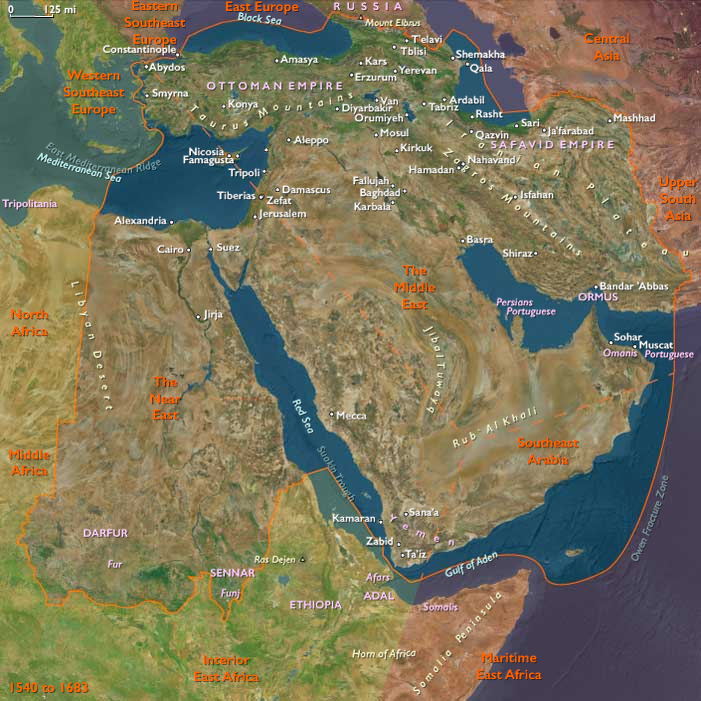
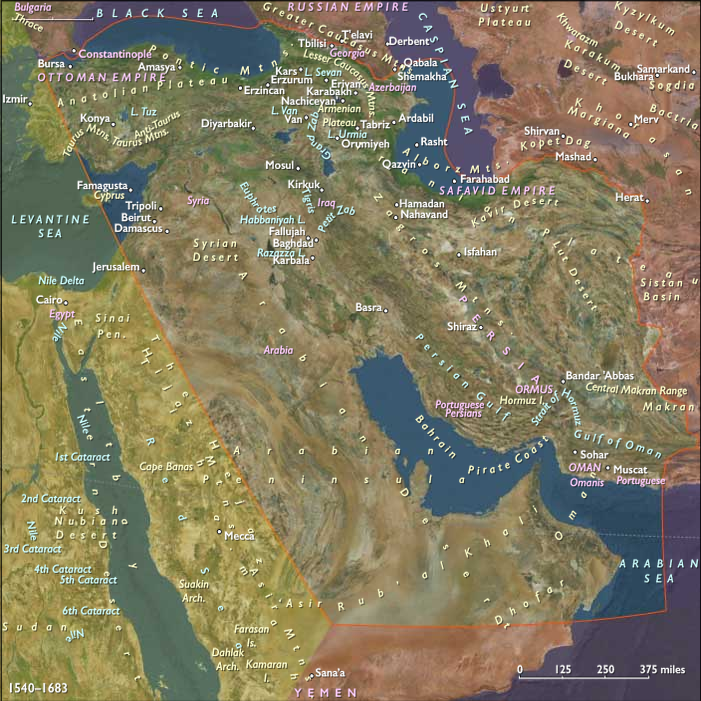
Abbas' tolerance towards Christians is part of his policy of establishing diplomatic links with European powers to try to enlist their help in the fight against their common enemy, the Ottoman Empire.
The idea of such an anti-Ottoman alliance is not a new one—over a century before, Uzun Hassan, then ruler of part of Iran, had asked the Venetians for military aid—but none of the previous Safavids had made diplomatic overtures to Europe.
Abbas' attitude is in marked contrast to that of his grandfather, Tahmasp I, who had expelled the English traveler Anthony Jenkinson from his court on hearing he was a Christian.
For his part, Abbas had declared that he "preferred the dust from the shoe soles of the lowest Christian to the highest Ottoman personage."
Abbas had in 1599 sent his first diplomatic mission to Europe.
The group had crossed the Caspian Sea and spent the winter in Moscow, before proceeding through Norway, Germany (where it had been received by Emperor Rudolf II) to Rome where Pope Clement VIII had given the travelers a long audience.
They finally arrive at the court of Philip III of Spain in 1602.
Although the expedition never manages to return to Iran, being shipwrecked on the journey around Africa, it marks an important new step in contacts between Iran and Europe and Europeans begin to be fascinated by the Iranians and their culture.
The number of diplomatic missions to and fro will greatly increase.
Locations
People
Groups
- Muslims, Sunni
- Muslims, Shi'a
- Papal States (Republic of St. Peter)
- Germany, Kingdom of (within the Holy Roman Empire)
- Christians, Roman Catholic
- Holy Roman Empire
- Ottoman Empire
- Persia, Safavid Kingdom of
- Protestantism
- Russia, Tsardom of
- Spain, Habsburg Kingdom of
- Habsburg Monarchy, or Empire
- Norway, dependent Danish kingdom of
Subjects
Regions
Subregions
Related Events
Showing 10 events out of 33859 total
Years: 1602 - 1602
Locations
People
Groups
- Muslims, Sunni
- Muslims, Shi'a
- Papal States (Republic of St. Peter)
- Germany, Kingdom of (within the Holy Roman Empire)
- Christians, Roman Catholic
- Holy Roman Empire
- Ottoman Empire
- Persia, Safavid Kingdom of
- Protestantism
- Russia, Tsardom of
- Spain, Habsburg Kingdom of
- Habsburg Monarchy, or Empire
- Norway, dependent Danish kingdom of
Subjects
Regions
Subregions