
The Anglo-French War and the Battle of …
Years: 1204 - 1215
The Anglo-French War and the Battle of Bouvines (1214): A Turning Point in the Struggle for French Dominance
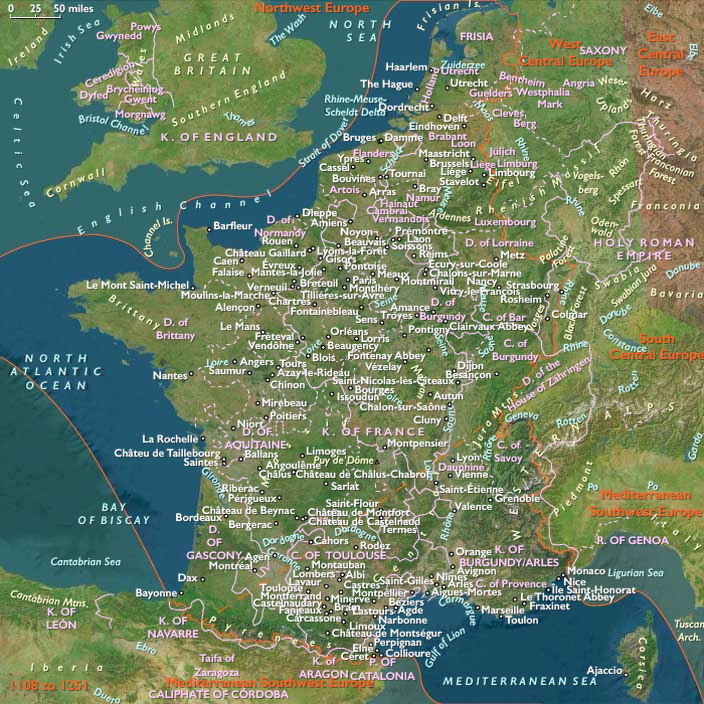
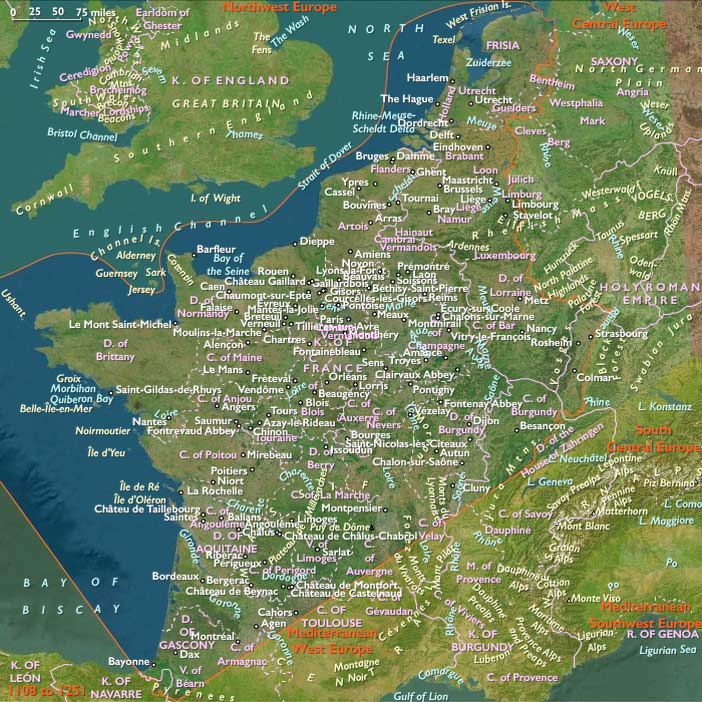
The war between John, King of England, and Philip II of France was one phase in the broader struggle between the Plantagenets and the Capetians over control of English-ruled territories in France. This conflict, which had begun in 1154 with Henry II’s accession, reached a decisive moment at the Battle of Bouvines on July 27, 1214, where Philip II inflicted a crushing defeat on England and its allies.
The Anglo-French War: Context and Rivalry (1154–1214)
- The war was part of a longer conflict over Plantagenet-controlled lands in France, including Normandy, Anjou, Maine, and Aquitaine.
- It intensified after 1202, when Philip II declared John’s French lands forfeit, leading to the Capetian conquest of Normandy in 1204.
- By 1214, John, desperate to reclaim his lost territories, formed an anti-French coalition with:
- Otto IV, Holy Roman Emperor.
- Ferdinand, Count of Flanders.
- Other discontented vassals of Philip II.
The Battle of Bouvines (July 27, 1214): Philip’s Decisive Victory
- Philip II faced a two-front war, with:
- John leading an invasion of western France, advancing from Aquitaine into Anjou.
- Otto IV and the coalition armies attacking in northern France.
- Philip prioritized defending the north, personally leading his forces against Otto and the Flemish-German coalition at Bouvines.
- The battle was a decisive Capetian victory, with:
- Otto IV fleeing the battlefield, his imperial authority permanently weakened.
- Ferdinand of Flanders captured, crippling Flemish opposition to Philip.
- John’s hopes of reclaiming Normandy shattered, forcing him to retreat to England.
Impact of the Battle of Bouvines
-
Secured Philip II’s Dominance in France
- The battle confirmed Capetian control over Normandy, ensuring that English kings would never regain it.
- Philip was now undisputed ruler of northern France, marking a turning point in the decline of Angevin power on the continent.
-
Weakened John’s Rule in England
- The defeat at Bouvines discredited John, leading to noble rebellion in England.
- This crisis culminated in 1215 with the signing of Magna Carta, limiting royal authority and setting the foundation for English constitutional law.
-
Elevated Capetian France as Europe’s Leading Power
- Philip’s victory strengthened the French monarchy, paving the way for the centralization of royal power.
- France emerged as the dominant force in medieval Europe, ending centuries of Plantagenet dominance in France.
The Long-Running Anglo-French Conflict (1154–1242)
- The war, though effectively decided at Bouvines, did not fully end English ambitions in France.
- It continued until 1242, when Louis IX of France decisively defeated Henry III of England at the Battle of Taillebourg, finally securing French control over former Angevin lands.
The Battle of Bouvines (1214) was the defining moment in Philip II’s campaign to dismantle the Angevin Empire, marking the beginning of the end of English territorial claims in northern France and the rise of Capetian France as the dominant power in Europe.
People
Groups
- Normandy, Duchy of
- Normans
- French people (Latins)
- France, (Capetian) Kingdom of
- English people
- Anglo-Normans
- England, (Plantagenet, Angevin) Kingdom of
- Angevin Empire
Topics
Commodoties
Subjects
Regions
Subregions
Related Events
Showing 10 events out of 28 total
Years: 1204 - 1215
People
Groups
- Normandy, Duchy of
- Normans
- French people (Latins)
- France, (Capetian) Kingdom of
- English people
- Anglo-Normans
- England, (Plantagenet, Angevin) Kingdom of
- Angevin Empire
Topics
Commodoties
Subjects
Regions
Subregions