
Maritime East Asia (2493–2350 BCE): Late Longshan …
Years: 2493BCE - 2350BCE
Maritime East Asia (2493–2350 BCE): Late Longshan Expansion and Early Urbanization
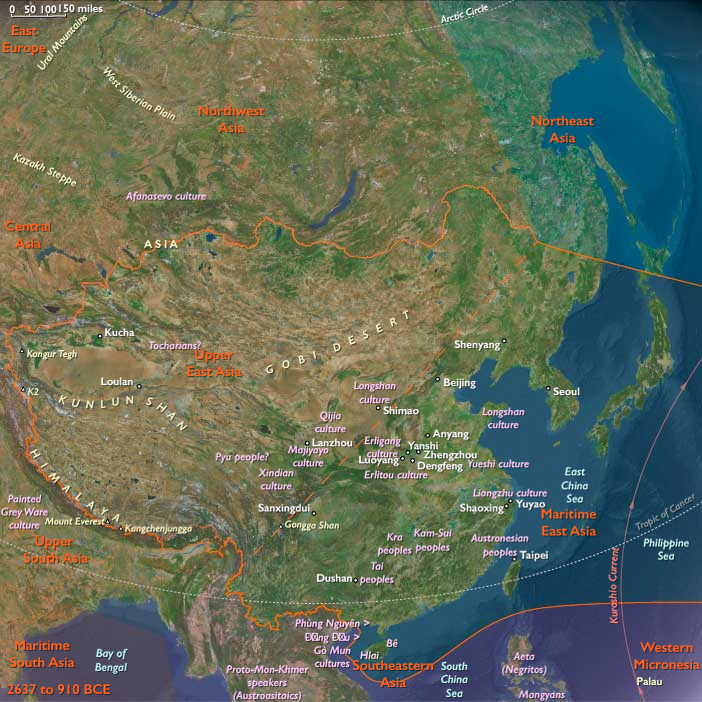
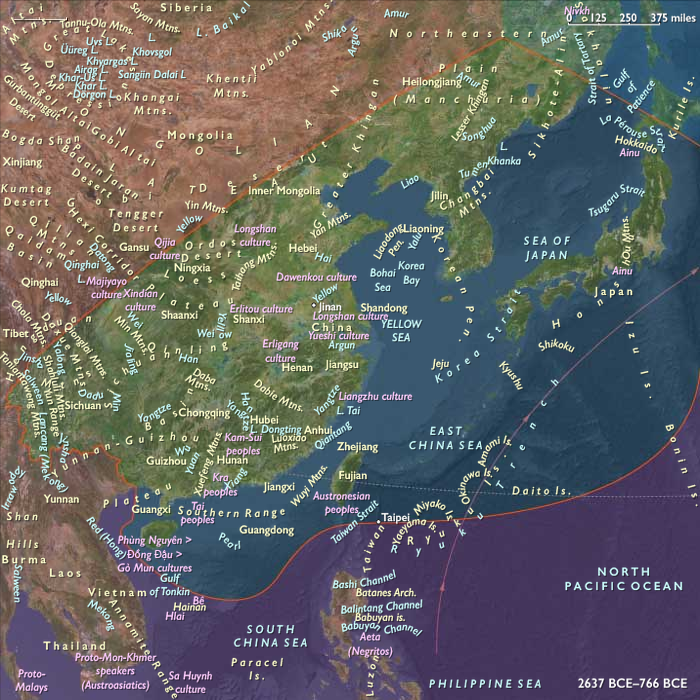
Between 2493 BCE and 2350 BCE, Maritime East Asia—comprising lower Primorsky Krai, the Korean Peninsula, the Japanese Archipelago below northern Hokkaido, Taiwan, and southern, central, and northeastern China—continues to witness significant social and cultural developments, especially during the Late Longshan period in China. This era is characterized by increased geographic diversification, the expansion of agricultural practices, early urban settlement formation, and regional interactions that lay critical foundations for the evolution of more complex societies in subsequent periods.
Regional Expansion of Late Longshan Culture
During this era, the Longshan civilization expands notably into a wide variety of geographic regions across China, encompassing numerous distinctive sub-periods. One such prominent regional variant is the Shaanxi Longshan, flourishing notably along the middle reaches of the Jing River and Wei River valleys. This region later gains historical prominence through its strategic location near routes such as the emerging North Silk Road, underscoring the long-term significance of early settlement patterns established during this era.
These diverse regional manifestations of Longshan culture demonstrate increased cultural complexity and indicate extensive intra-regional interactions, setting an enduring pattern for subsequent Chinese historical developments.
Rise of Urbanization and Fortified Settlements
The Late Longshan period marks a decisive shift towards urbanization and increased social complexity. Permanent settlements begin exhibiting characteristics of early cities, including substantial defensive structures such as rammed-earth walls and moats. Notably, the archaeological site of Taosi (in modern-day Shanxi Province) emerges as the largest walled settlement of this period, reflecting growing population density, specialized labor, and social stratification.
Expansion and Consolidation of Rice Cultivation
Agricultural practices, particularly rice cultivation, become firmly established and expand widely across the Yangzi River basin and beyond, securing the foundation for sustainable population growth and stable economic systems. The enhanced agricultural productivity supports growing populations, facilitating further social complexity and specialization of labor, critical for urban growth and technological innovation in subsequent periods.
Legacy of the Era: Foundations for Complexity
Thus, between 2493 BCE and 2350 BCE, Maritime East Asia experiences critical developments characterized by increased regional diversification within the Longshan cultural framework, expansion of fortified urban settlements such as Taosi, and widespread agricultural consolidation. These transformative processes lay essential foundations for the subsequent emergence of more sophisticated social structures, advanced agricultural economies, and urban civilizations that define later historical trajectories in Lower East Asia.
Groups
Topics
Commodoties
Subjects
Regions
Subregions
Related Events
Showing 10 events out of 562 total
Years: 2493BCE - 2350BCE
Groups
Topics
Commodoties
Subjects
Regions
Subregions