
A university had been established in Douai …
Years: 1569 - 1569
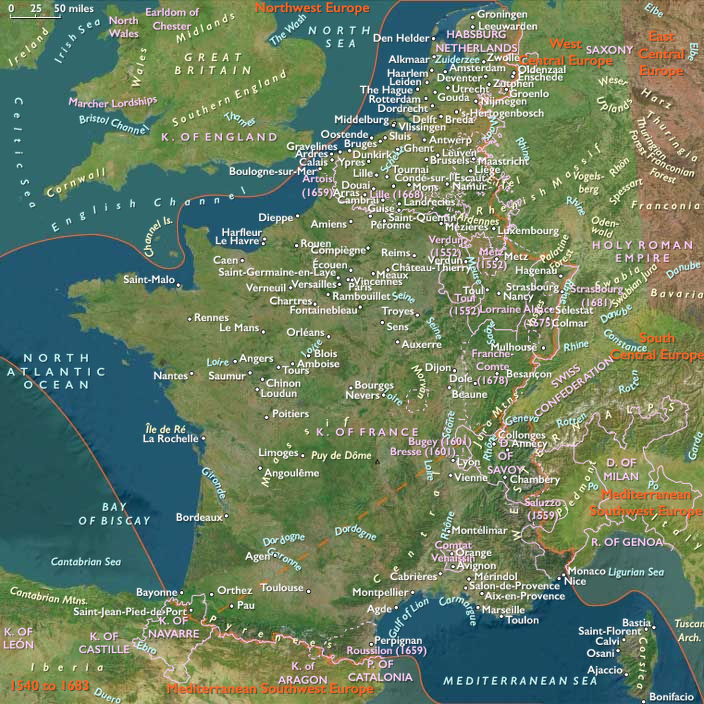
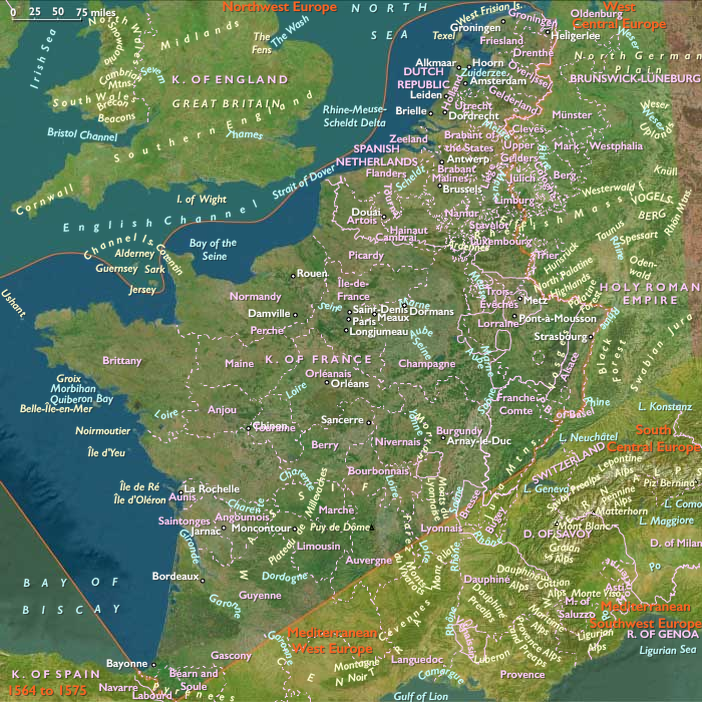
A university had been established in Douai in 1560-1562 by Philip II of Spain, as part of a general program of consolidation of the Spanish Low Countries; it is in some sense a sister-university to that founded at Louvain in 1426.
Of an avowedly Catholic character, it has five faculties: theology, canon and civil law, medicine, and arts.
There has been a strong English influence in the early years, several of the chief posts being held by professors who had fled Oxford.
It is here, too, that after taking his licentiate in 1560, William Allen had become Regius Professor of Divinity.
The foundation of this University had coincided with the presence of a large number of English Catholics living at Douai, in the wake of the accession of Elizabeth I and the reimposition of Protestantism in England.
These included the university's first chancellor, Richard Smith, who had studied at Oxford and thus had already brought the new University under Oxford influences.
It is William Allen who first had the idea for a seminary for English Catholic priests, with studies linked to those of the university.
He had the idea in a conversation with Dr. Jean Vendeville, then Regius Professor of Canon Law in the University of Douai and later Bishop of Tournai (Allen and Vendeville had gone on a pilgrimage to Rome together in autumn 1567).
The foundation had begun to take definite shape when Allen leased a house at Douai on Michaelmas Day, 1568, and the College is founded in 1569.
Similar colleges also come about at Douai for Scottish and Irish Catholic clergy, and also Benedictine, Franciscan and Jesuit houses.
The aim of Allen and the College is to gather together some of the many English Catholics living in exile in different countries of the continent and provide them with facilities for continuing their studies (in what is effectively a Catholic University of Oxford in exile), thus producing a ready-made stock of educated English Catholic clergy ready for England's re-conversion to Catholicism (expected by Allen in the near future).
The college is the first of the type of seminary ordered by the Council of Trent, and so receives papal approval shortly after its establishment.
It is also taken under the protection of King Philip II of Spain, who assigns it an annual grant of two hundred ducats.
Locations
People
Groups
Topics
Subjects
Regions
Subregions
Related Events
Showing 10 events out of 35466 total
Years: 1569 - 1569
Locations
People
Groups
Topics
Subjects
Regions
Subregions