
A synagogue is built in 1012 in …
Years: 1012 - 1012
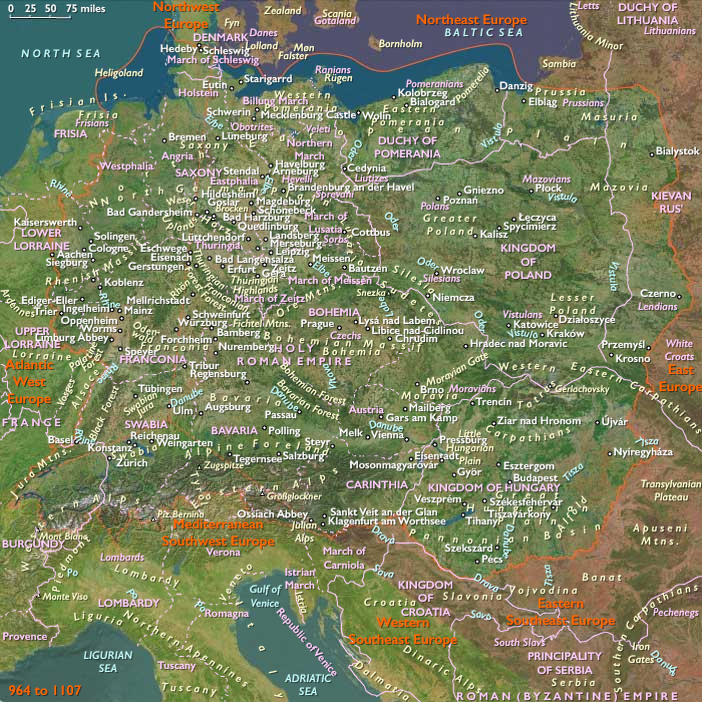
A synagogue is built in 1012 in Cologne, where the Jewish presence is documented in the year 321 CE.
The first documentary reference to the Jews after 331 occurs during the time of Archbishop Heribert of Cologne (999-1021), the wise friend of Emperor Otto III.
Winheim and Gelenius, basing themselves on the Annual Chronicles of Cologne during the fourteenth and fifteenth century, report that in 1426 the synagogue was turned into a church.
They then remark that this synagogue had been in existence four hundred and fourteen years.
That would place its origin in the time of Heribert.
Locations
People
Groups
Subjects
Regions
Subregions
Related Events
Filter results
Showing 10 events out of 51826 total
Mediterranean Southwest Europe (1012–1023 CE): Continued Fitna of Al-Andalus, Cultural Loss, and Scientific Innovation
The era 1012–1023 CE in Mediterranean Southwest Europe is marked by the continued upheaval of the Fitna of al-Andalus, severe cultural losses, and significant advancements in astronomical science.
Ongoing Fitna and Fragmentation in Al-Andalus
The internal conflict known as the Fitna of al-Andalus continues to devastate the region, deepening political instability and fragmentation. Various Muslim factions increasingly seek support from Christian kingdoms in the north, both through formal alliances and the hiring of mercenary Christian soldiers. The prolonged conflict results in the repeated looting and destruction of Córdoba and its suburbs, leading to the irreversible loss of many iconic monuments, including the Alcázar de los Reyes Cristianos and the luxurious Medina Azahara palace complex. The capital is temporarily relocated to Málaga as Córdoba struggles to maintain stability and order.
Economic Collapse and Fiscal Pressures
The protracted warfare places immense financial strain on the population of Al-Andalus, with heavy taxation exacerbating economic collapse. Continuous warfare and the associated financial burdens severely undermine the socioeconomic stability of the region, accelerating its fragmentation.
Emergence of the Taifa Kingdoms
In less than two decades following the onset of the Fitna, ten distinct successor states, known as taifas, emerge from the fractured Caliphate of Córdoba. Among these successor states is a brief restoration under Hisham II, while three other taifas form a distinctive dynastic line known as the Hammudid Dynasty. These small kingdoms represent the political reality of a fragmented Iberian Peninsula, reflecting the diminished central authority of the once-powerful Caliphate.
Scientific and Astronomical Innovation: Ibn al-Samh
Amidst political turmoil, scholarly and scientific activity endures. The Andalusian astronomer Ibn al-Samh develops and describes the equatorium around 1015 CE, an innovative instrument providing graphic solutions to Ptolemaic equations for calculating planetary positions. The equatorium, typically crafted from brass or paper disks featuring rotatable volvelles, significantly advances practical astronomy, influencing the development of astronomical instruments throughout the medieval period.
Continued Cultural and Scholarly Activity
Despite political chaos, cultural and intellectual resilience remain evident, especially within Mozarab and Jewish communities. Lucena continues to serve as a notable center of Jewish scholarship, preserving a rich tradition of intercultural exchange and intellectual activity even amid widespread instability.
Legacy of the Era
The era 1012–1023 CE underscores profound political instability and cultural destruction resulting from the ongoing Fitna, alongside continued scholarly achievements in scientific fields. These developments deeply shape the historical trajectory of Mediterranean Southwest Europe, heralding significant transformations in its political, cultural, and scientific landscapes.
Jurchen pirates invade northern Kyushu in the so-called Toi invasion of 1019, Toi meaning barbarian in the Korean language at this time.
The Song Dynasty Chinese encyclopedia Prime Tortoise of the Record Bureau (which had been compiled since 1005), is completed in one thousand volumes of none million four hundred thousand written Chinese characters.
The largest of the Four Great Books of Song, it is an encyclopedia of political essays, autobiographies, memorials and decrees.
Kaifeng, the capital of the Chinese Empire, becomes the largest city of the world around this time (1013), taking the lead from Córdoba in Al-Andalus.
The city has some half a million residents by 1020; the population is over a million people including all those present in the nine designated suburbs.
The Song military has one million registered soldiers by 1021, a ten percent increase over the twenty years since the turn of the eleventh century, when the Song military only had nine hundred thousand soldiers.
Sviatopolk I the Accursed and his brother Yaroslav I the Wise struggle for the title of Grand Duke of Kiev.
Sviatopolk's father-in-law, Duke Boleslaw of Poland, intervenes on behalf of Sviatopolk, defeats Yaroslav's armies, and temporarily secures the throne for Sviatopolk.
The expedition is initially successful for Boleslaw and Sviatopolk, who overrun Kiev and send Yaroslav into exile.
It ends with Boleslaw's withdrawal from Kiev and the military defeat of Sviatopolk by Yaroslav, who returns to the Kievan throne from Novgorod.
The return of Yaroslav leads to the golden age of Kiev and the Kievan Rus'.
Chronicles of the expedition include legendary accounts as well as factual history and have been subject to varied interpretations.
East Central Europe (1012–1023 CE): Polish Expansion under Bolesław I, Hungarian Consolidation under Stephen I, and Bohemian Dynastic Struggles
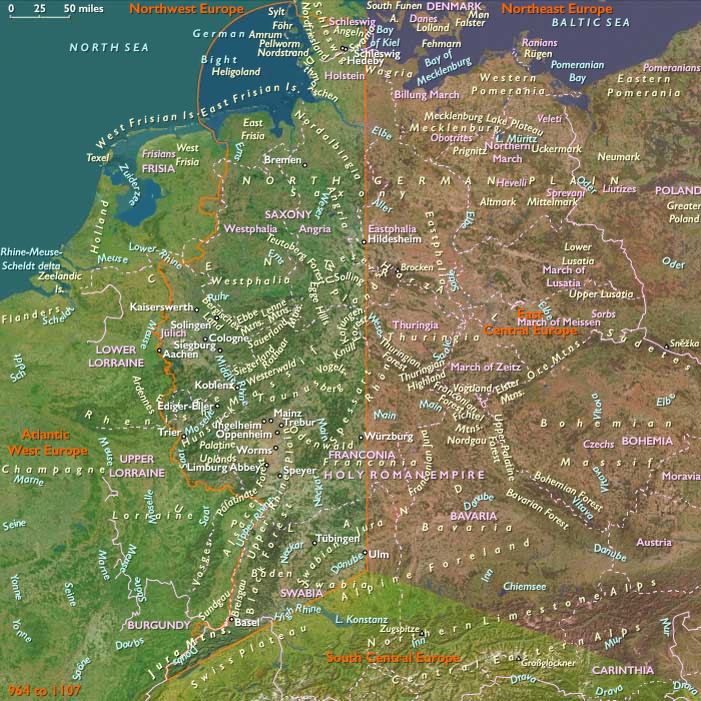
Between 1012 and 1023 CE, East Central Europe—encompassing modern-day Poland, Czechia, Slovakia, Hungary, and the eastern parts of Germany and Austria east of 10°E and north of the defined southeastern boundary—experienced dynamic shifts in political power, cultural identity, and regional influence. Bolesław I "the Brave" of Poland extended Polish dominance into Bohemia and beyond, King Stephen I consolidated Christian monarchy and administrative authority in Hungary, while the Přemyslid dynasty in Bohemia faced intense internal dynastic struggles and external pressures from Poland and the Holy Roman Empire, reshaping the region’s political landscape.
Political and Military Developments
Polish Expansion and Regional Dominance
-
Under Bolesław I, Poland significantly expanded its political influence, notably through successful military campaigns into Bohemia (briefly controlling Prague from 1003–1004) and through extended authority over parts of Moravia and Slovakia. Bolesław's strategic ambitions established Poland as a leading regional power.
Hungarian Consolidation under Stephen I
-
King Stephen I strengthened Hungary’s internal structures, firmly establishing royal authority, promoting extensive legal and administrative reforms, and securing Hungary’s international position through diplomatic alliances with the Holy Roman Empire and Poland, thus stabilizing Hungary’s emerging kingdom.
Bohemian Dynastic Instability
-
The Přemyslid dynasty experienced severe internal strife, notably between Jaromír and Oldřich, resulting in shifting political allegiances and vulnerability to external interference, particularly from Poland under Bolesław I and the Holy Roman Empire’s ongoing regional ambitions.
Imperial Influence under Henry II
-
Emperor Henry II (r. 1002–1024) intensified efforts to assert imperial authority in East Central Europe, intervening repeatedly in Bohemian affairs and challenging Bolesław’s ambitions, attempting to maintain and extend imperial dominance eastward.
Economic and Technological Developments
Expansion of Trade and Economic Networks
-
Stability in Poland and Hungary supported flourishing trade networks, enhancing regional economic prosperity. Commerce in textiles, precious metals, agricultural produce, and luxury goods linked East Central Europe closely with broader European markets.
Urban Development and Fortifications
-
Continued development of fortified urban centers characterized this era. In Poland (Gniezno, Kraków), Hungary (Esztergom, Székesfehérvár), and Bohemia (Prague), fortifications and royal administrative centers expanded, enhancing regional defense, governance, and trade.
Cultural and Artistic Developments
Polish Ecclesiastical Patronage and Royal Culture
-
Bolesław I's reign saw robust development in ecclesiastical architecture, monastic foundations, manuscript illumination, and religious scholarship, significantly influencing Poland’s cultural identity and reinforcing its integration into European Christendom.
Hungarian Royal and Christian Identity
-
King Stephen I fostered a distinctive Hungarian Christian identity by promoting ecclesiastical institutions, constructing cathedrals and monasteries, and adopting European royal traditions. These efforts profoundly shaped Hungarian medieval culture.
Bohemian Cultural Continuity Amid Instability
-
Despite internal political turmoil, Bohemia maintained vibrant cultural production, particularly in religious architecture and manuscript illumination, sustaining Prague’s role as a significant cultural and ecclesiastical center.
Settlement and Urban Development
Polish Administrative and Ecclesiastical Expansion
-
Polish cities continued robust growth as key political, religious, and economic centers. Gniezno and Kraków, in particular, expanded as hubs of royal administration and cultural life.
Hungarian Urban and Royal Development
-
Under Stephen I, Hungarian urbanization advanced significantly, notably at Esztergom and Székesfehérvár, consolidating the kingdom’s administrative structures and ecclesiastical institutions.
Bohemian Urban Stability Amid Dynastic Strife
-
Despite political instability, Prague maintained its centrality as an administrative, religious, and cultural center, continuing steady urban growth and fortification.
Social and Religious Developments
Expansion and Consolidation of Christianity
-
Christianity solidified its dominant role in societal structures across Poland, Hungary, and Bohemia. Churches, monasteries, and bishoprics reinforced social cohesion, educational institutions, and governance structures.
Strengthening Dynastic Power and Aristocracy
-
Royal and aristocratic structures intensified their political and social influence, especially in Poland and Hungary, clearly defining hierarchical governance and societal order throughout the region.
Long-Term Consequences and Historical Significance
The era 1012–1023 CE significantly shaped medieval East Central Europe, with Bolesław’s Poland reaching its territorial peak, Stephen I establishing firm foundations for a unified Hungarian monarchy, and Bohemia enduring critical dynastic turmoil. These developments solidified regional political identities, expanded cultural influence, and strengthened the institutional frameworks central to the High Medieval history of East Central Europe.
The fighting in the German-Polish War ends with the Peace of Bautzen in 1018, which leaves Lusatia and Upper Lusatia with Poland, but Bohemia becomes a duchy in the Holy Roman Empire.
The plastic arts experience a great revival under concerted royal and ecclesiastical patronage by Germany’s Saxon Ottonian dynasty.
The relief-covered bronze doors commissioned by Bishop Bernward of Hildesheim for his cathedral are the most impressive manifestation of Ottonian bronze casting and the first bronze doors to be cast in one piece in northern Europe.
Bernward has door wings decorated with typological images in parallel, scenes from the Old and the New Testament; the force of the gestures and the use of unadorned surface as dramatic interval in the episode of Adam and Eve reproached by the Lord has no precedent in the history of art; this creation establishes a sculptural tradition of historical narrative that distinguishes Romanesque and later bronze doors.
The figures spiraling around the shaft of the so-called Christ's Column at St. Michael's, Hildesheim, evoke the triumphal columns of Trajan and Marcus Aurelius.
Much can be surmised of Byzantium’s relationship to art in this era from the fact that one of the great creations of fourth century BCE sculptor Lysippus, the colossal bronze seated Heracles at Tarentum, later sent to Rome and then to the Hippodrome at Constantinople, is in 1022 melted down.
Eastern Southeast Europe (1012–1023 CE): Basil II's Consolidation and New Challenges
Settlement and Migration Patterns
Demographic Continuity and New Threats
From 1012 to 1023 CE, Eastern Southeast Europe maintained overall demographic stability despite emerging threats and continued military campaigns. The Pechenegs, a Turkic tribal confederation and northern neighbors of the Bulgarians, increasingly posed a threat, intensifying raids into imperial territories after the Byzantine conquest of Bulgaria in 1018.
Political and Military Developments
Pecheneg Incursions
Previously viewed as valuable allies by earlier Byzantine emperors such as Constantine VII against the Bulgarians, Magyars, and Rus', the Pechenegs shifted into a formidable threat. Their aggressive raids across the Danube into imperial territories increased significantly following Bulgaria's fall to Byzantine forces.
Basil II’s Persistent Leadership
Emperor Basil II, described vividly in contemporary histories as a robust and austere figure, governed with ruthless efficiency. Renowned for his short stature, bright blue eyes, and distinctive mannerisms, Basil was a soldierly leader, unsparing and tenacious both militarily and administratively. His personality traits—particularly his rigorous attention to detail and intense focus—allowed him to consolidate imperial power successfully.
Strengthening Imperial Authority
Basil II consistently sought to reinforce imperial authority by weakening powerful regional magnates, especially influential military families in Asia Minor. This policy of reducing aristocratic dominance included rigorous inspections of land ownership and arbitrary confiscations of extensive estates, significantly bolstering the power of the central authority and aiding smallholder farmers who owed military service and taxes directly to the crown.
Economic and Technological Developments
Fiscal Efficiency and Wealth Accumulation
Basil’s rigorous administrative policies resulted in substantial financial gains for the empire. Despite costly military campaigns, he maintained a well-stocked treasury, even constructing special underground chambers to store imperial wealth securely.
Continued Military and Infrastructure Investments
To sustain his extensive military campaigns and consolidate territories, Basil significantly invested in military infrastructure and logistics, reinforcing fortifications along critical frontiers, especially following the conquest of Bulgaria.
Cultural and Artistic Developments
Popular Vernacular Poetry
The period saw a notable cultural development with the emergence of popular poetry composed in vernacular Greek, reflecting a broader societal shift and diversification of cultural expression in Byzantine territories.
Religious and Cultural Patronage
Though Basil II personally showed limited interest in scholarly pursuits, he commissioned religious art and undertook the construction or restoration of churches and monasteries, particularly in Boeotia and Athens, reflecting conventional imperial piety.
Social and Religious Developments
Orthodox Christianity’s Dominance
Orthodox Christianity continued to provide spiritual stability and societal cohesion, reinforced through Basil’s patronage of religious institutions and rebuilding efforts in key regions, further solidifying the religion's central role within society.
Continued Presence of Bogomilism
The Bogomil religious movement maintained its regional influence, persisting as an alternative religious expression, especially among rural populations, and continuing to shape local religious dynamics through its distinct dualistic beliefs.
Long-Term Consequences and Historical Significance
The era from 1012 to 1023 CE highlighted Basil II's administrative rigor and strategic tenacity, significantly reshaping Eastern Southeast Europe's geopolitical landscape. The intensified threats from the Pechenegs, Basil’s internal administrative reforms, and his forward-looking ambitions to reinforce Byzantine control in southern Italy and Sicily underscored his reign's enduring impact on the region’s historical trajectory.
Mahmud of Ghazni has set out on regular expeditions against the Rajput Confederacy after deciding to retaliate for their combined resistance, leaving the conquered kingdoms in the hands of Hindu vassals and annexing only the Punjab region.
He also vows to raid India every year.
Mahmud had already had relationships with the leadership in Balkh through marriage.
Its local emir, Abu Nasr Mohammad, had offered his services to the Sultan and his daughter to Mahmud's son, Muhammad.
After Nasr's death, Mahmud had brought Balkh under his leadership.
This alliance greatly helps him during his expeditions into Northern India.
The Sindhi Swarankar Community and other Hindus who have escaped conversion flee from Sindh to escape sectarian violence during the period of Mahmud’s invasion.
Years: 1012 - 1012
Locations
People
Groups
Subjects
Regions
Subregions