
The Kamakura period (1185-1333) marks the transition …
Years: 1108 - 1251
The Kamakura period (1185-1333) marks the transition to the Japanese "medieval" era, a nearly seven hundred-year period in which the emperor, the court, and the traditional central government are left intact, but are largely relegated to ceremonial functions.
Civil, military, and judicial matters are controlled by the bushi class, the most powerful of whom is the de facto national ruler.
The term feudalism is generally used to describe this period, being accepted by scholars as applicable to medieval Japan as well as medieval Europe.
Both had land-based economies, vestiges of a previously centralized state, and a concentration of advanced military technologies in the hands of a specialized fighting class.
Lords require the loyal services of vassals, who are rewarded with fiefs of their own.
The fief holders exercise local military rule and public power related to the holding of land.
This period in Japan differs from the old shoen system in its pervasive military emphasis.
Locations
People
Groups
Topics
Commodoties
Subjects
Regions
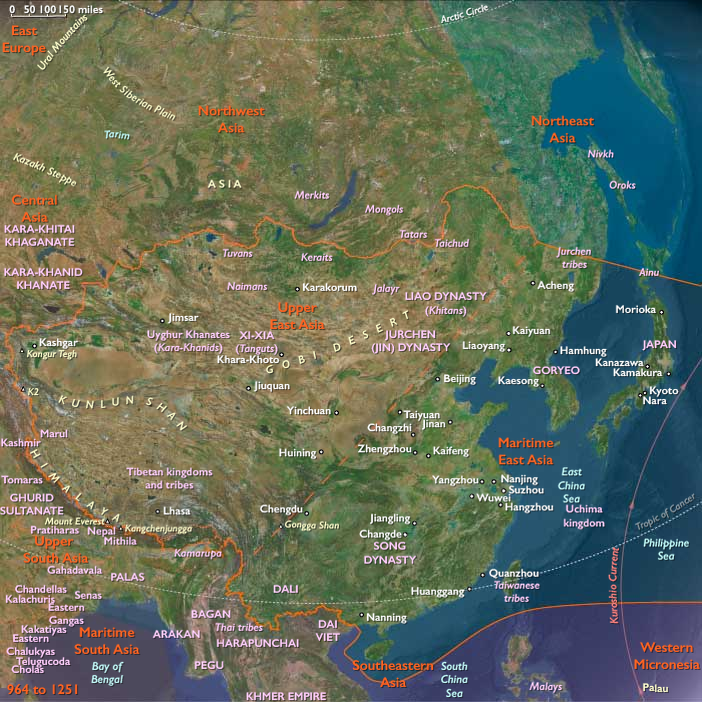
Subregions
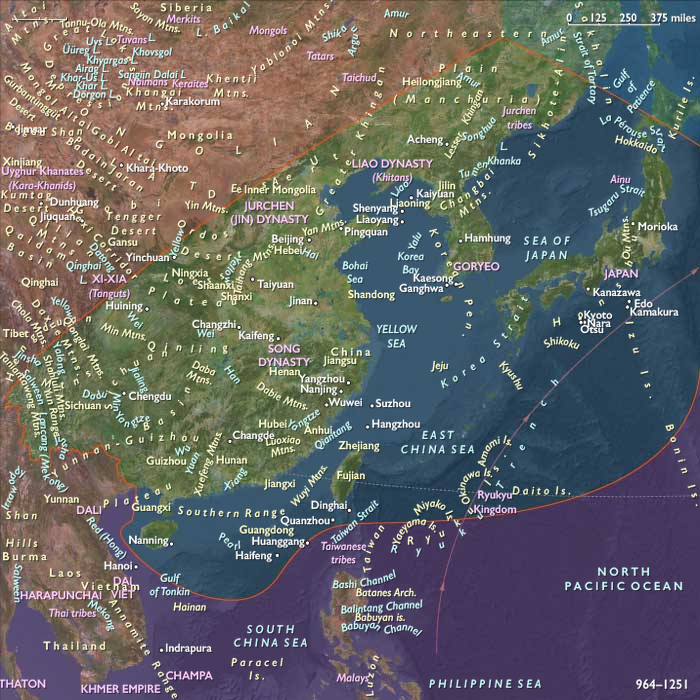
Years: 1108 - 1251
Locations
People
Groups
Topics
Commodoties
Subjects
Regions
Subregions