
A second and equally unsuccessful attack on …
Years: 1082 - 1082
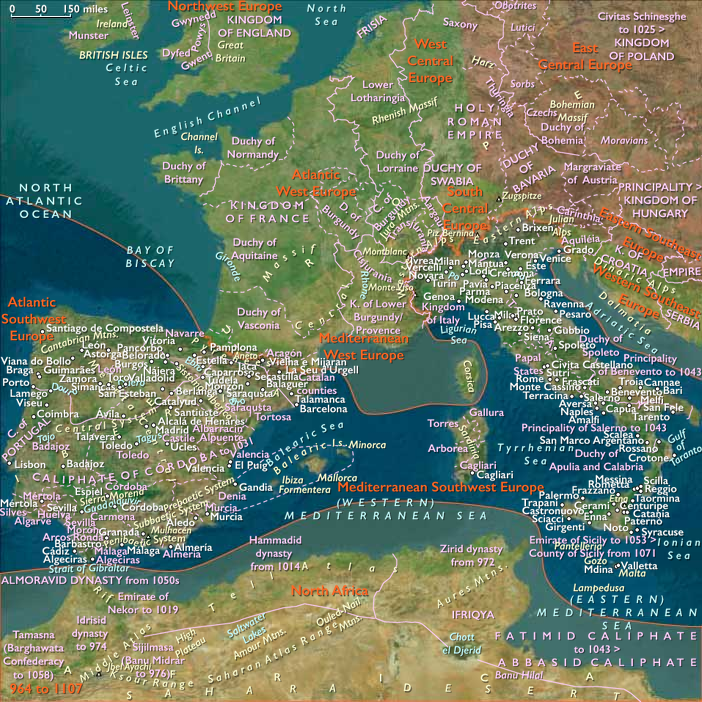
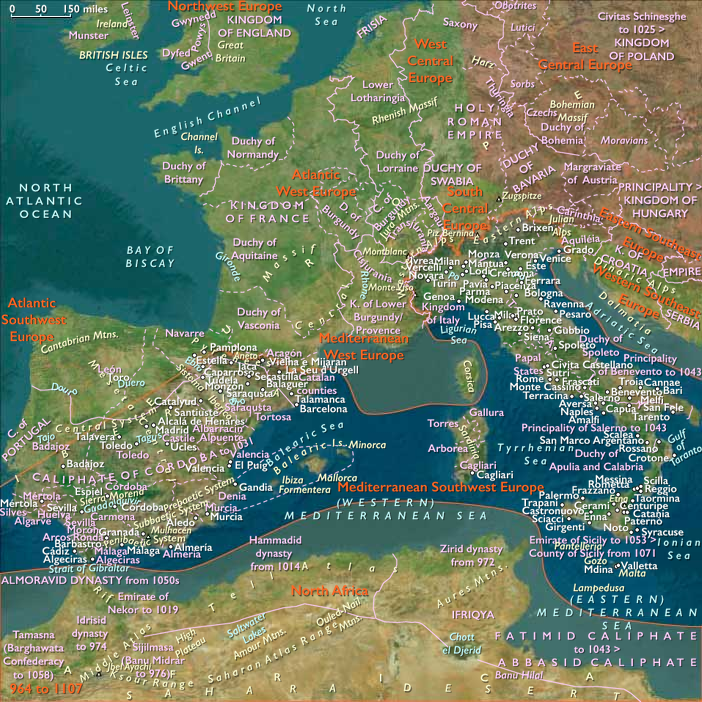
A second and equally unsuccessful attack on Rome is followed by a war of devastation in northern Italy with the adherents of Matilda.
Towards the end of 1082, the king makes a third attack on Rome.
Locations
People
- Alexios I Komnenos
- Henry IV, Holy Roman Emperor
- Hermann of Salm
- Matilda of Tuscany
- Pope Gregory VII
- Robert Guiscard
Groups
- Papal States (Republic of St. Peter)
- Saxony, Duchy of
- Tuscany, Margravate of
- Swabia, Duchy of
- Normans
- German, or Ottonian (Roman) Empire
- Italy, Kingdom of (Holy Roman Empire)
- Christians, Roman Catholic
- Roman Empire, Eastern: Doukid dynasty
- Apulia, Norman Duchy of
- Roman Empire, Eastern: Komnenos dynasty, restored
Topics
- Norman Conquest of Southern Italy
- Investiture Controversy
- Saxon Revolt, Great
- Holy Roman Empire-Papacy War of 1081-84
- Norman invasion of the Balkans, First
Commodoties
Subjects
Regions
Subregions
Related Events
Showing 10 events out of 50509 total
Years: 1082 - 1082
Locations
People
- Alexios I Komnenos
- Henry IV, Holy Roman Emperor
- Hermann of Salm
- Matilda of Tuscany
- Pope Gregory VII
- Robert Guiscard
Groups
- Papal States (Republic of St. Peter)
- Saxony, Duchy of
- Tuscany, Margravate of
- Swabia, Duchy of
- Normans
- German, or Ottonian (Roman) Empire
- Italy, Kingdom of (Holy Roman Empire)
- Christians, Roman Catholic
- Roman Empire, Eastern: Doukid dynasty
- Apulia, Norman Duchy of
- Roman Empire, Eastern: Komnenos dynasty, restored
Topics
- Norman Conquest of Southern Italy
- Investiture Controversy
- Saxon Revolt, Great
- Holy Roman Empire-Papacy War of 1081-84
- Norman invasion of the Balkans, First
Commodoties
Subjects
Regions
Subregions