
A military coalition of Greek city-states led …
Years: 481BCE - 481BCE
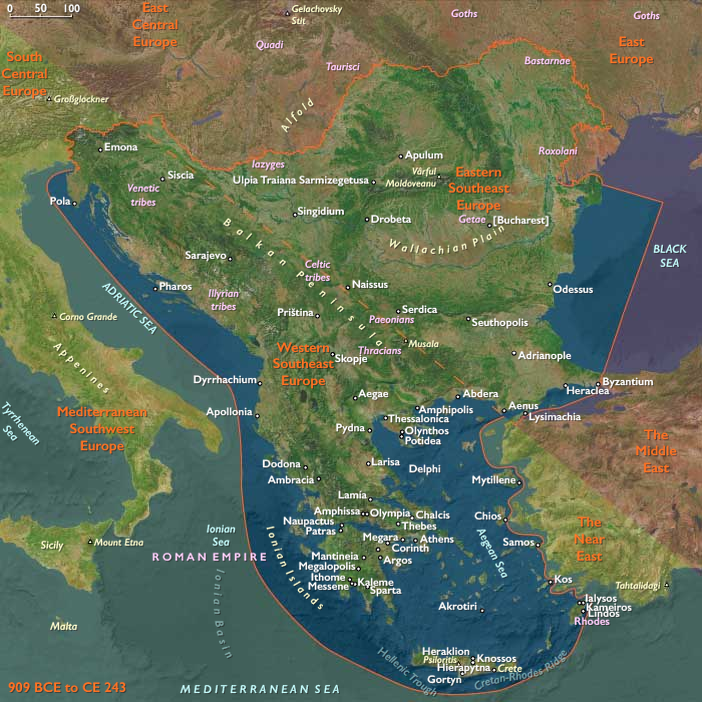
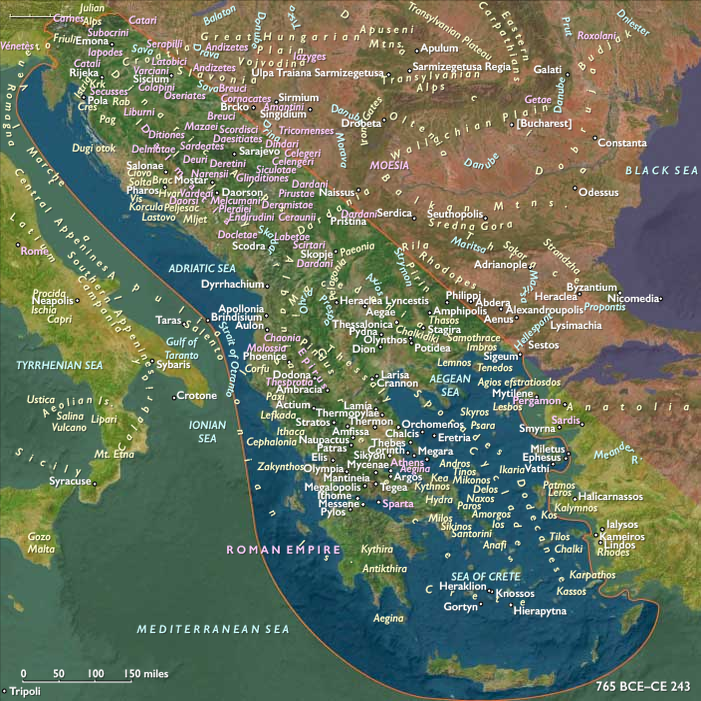
A military coalition of Greek city-states led by Sparta and known as the Peloponnesian League, also called the Spartan Alliance, is a major force in Greek affairs, forming the nucleus of resistance to the Persian invasions.
League policy, usually decisions on questions of war, peace, or alliance, is determined by federal congresses, summoned by the Spartans when they think fit; each member state has one vote.
A general Greek league against Persia is formed in 481.
Quarrels like that between Athens and Aegina must be set aside and help sought from distant or colonial Greeks such as the Cretans, Syracusans, and Corcyrans, whose extraordinarily large fleet of sixty ships (possibly developed against Adriatic piracy but also—surely—against Corinth) will be a prime asset.
Corcyra, however, waits on events, and Crete stays out altogether, while Syracuse and Sicily, now under the tyranny of Gelo, generally have barbarian enemies of their own to cope with, the Carthaginians.
Command of the army is given to Sparta, …
Locations
People
Groups
- Athens, City-State of
- Thebes, City-State of
- Argos, City-State of
- Greece, classical
- Persian people
- Aegina, city-state of
- Sparta, Kingdom of
- Carthage, Kingdom of
- Corinth, City-State of
- Syracuse, Corinthian city-state of
- Peloponnesian League (Spartan Alliance)
- Boeotian League
- Achaemenid, or First Persian, Empire
Topics
- Younger Subboreal Period
- Iron Age Europe
- Iron Age Cold Epoch
- Classical antiquity
- Greco-Persian Wars, Early
Commodoties
Subjects
- Commerce
- Watercraft
- Environment
- Labor and Service
- Conflict
- Faith
- Government
- Custom and Law
- Technology
- Piracy
Regions
Subregions
Related Events
Showing 10 events out of 65591 total
Years: 481BCE - 481BCE
Locations
People
Groups
- Athens, City-State of
- Thebes, City-State of
- Argos, City-State of
- Greece, classical
- Persian people
- Aegina, city-state of
- Sparta, Kingdom of
- Carthage, Kingdom of
- Corinth, City-State of
- Syracuse, Corinthian city-state of
- Peloponnesian League (Spartan Alliance)
- Boeotian League
- Achaemenid, or First Persian, Empire
Topics
- Younger Subboreal Period
- Iron Age Europe
- Iron Age Cold Epoch
- Classical antiquity
- Greco-Persian Wars, Early
Commodoties
Subjects
- Commerce
- Watercraft
- Environment
- Labor and Service
- Conflict
- Faith
- Government
- Custom and Law
- Technology
- Piracy
Regions
Subregions