
Domenico Trevisan, the Venetian ambassador to Cairo, …
Years: 1513 - 1513
Domenico Trevisan, the Venetian ambassador to Cairo, signs a Mamluk-Venetian commercial treaty is signed 1513.
After this point, however, and after the reverses of the Mamluks and the Persians against the Ottomans, Venice will increasingly favor a rapprochement with the Ottoman Empire.
Locations
People
- Afonso de Albuquerque
- António de Saldanha
- Diogo Fernandes Pereira
- Duarte Pacheco Pereira
- Lopo Soares de Albergaria
- Manuel I of Portugal
- Tristão da Cunha
Groups
- Hinduism
- Arab people
- Jews
- Christians, Eastern (Diophysite, or “Nestorian”) (Church of the East)
- Nair
- Islam
- Kolattunādu (Kingdom of Cannanore)
- Christians, Roman Catholic
- Cochin, Kingdom of
- Venice, (Most Serene) Republic of
- Ormus, Kingdom of
- Ethiopia, Solomonid Dynasty of
- Kozhikode, or Calicut, Kingdom of
- Egypt and Syria, Mamluk Burji Sultanate of
- Portugal, Avizan (Joannine) Kingdom of
- Gujarat Sultanate
- Portuguese Empire
- Ottoman Empire
- Portuguese Mozambique
- Persia, Safavid Kingdom of
Topics
- India, Medieval
- Yemen, Medieval
- Age of Discovery
- Portuguese Conquests in India and the East Indies
- Colonization of Asia, Portuguese
- Safavid conversion of Iran to Shia Islam
- Portuguese–Mamluk naval war
- Portuguese Ceylon
Commodoties
Subjects
- Commerce
- Watercraft
- Engineering
- Labor and Service
- Conflict
- Exploration
- Faith
- Government
- Custom and Law
- Technology
- Finance
Regions
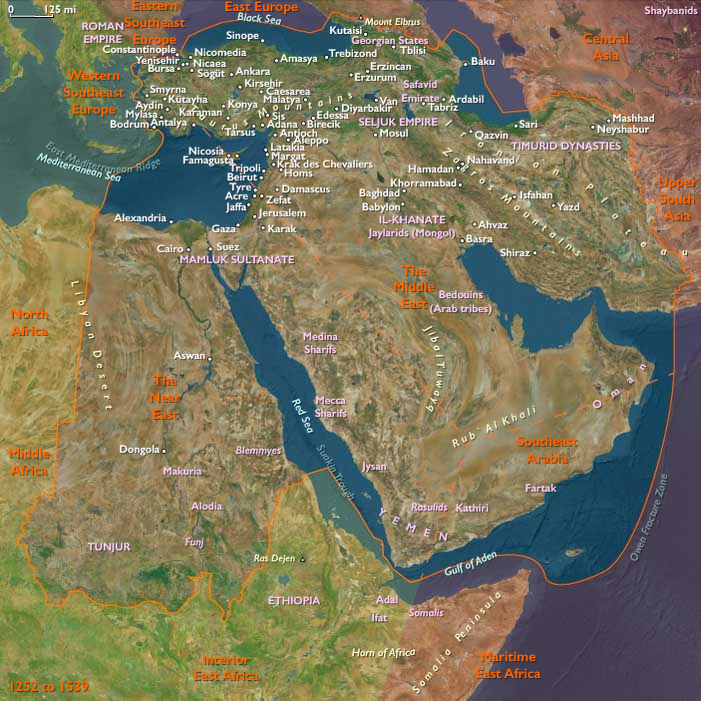
Subregions
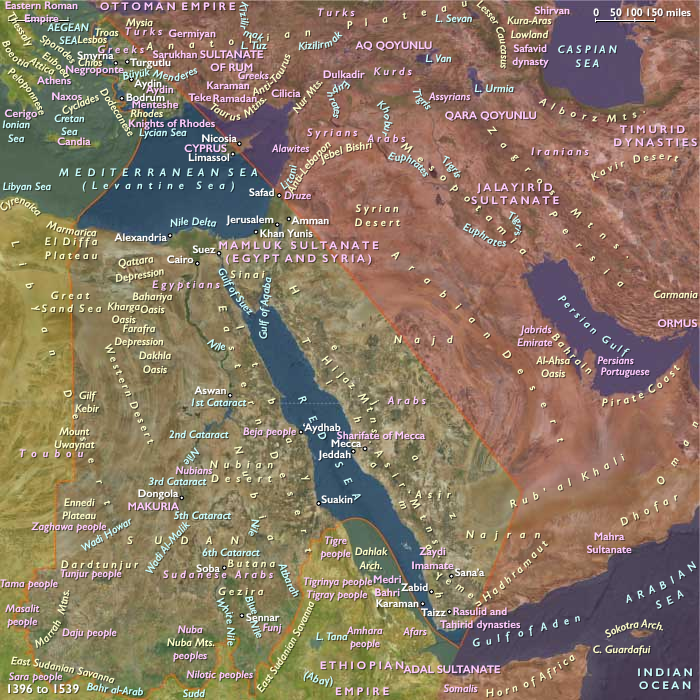
Related Events
Filter results
Showing 10 events out of 34 total
French and native raiding parties under the command of Louis Coulon de Villiers, following orders of the Governor of New France, had begun in May 1756 to harass the Oswego garrison from a camp on Henderson Bay (south of present-day Sackett's Harbor, New York).
Montcalm had arrived in Montreal in May 1756 to lead the French army troops.
He and Governor Vaudreuil had taken an immediate dislike to one another, and disagreed over issues of command.
Concerned over the massing of British troops at the southern end of Lake George, Montcalm had first gone to Fort Carillon on Lake Champlain to see to its defenses.
Vaudreuil had meanwhile begun massing troops at Fort Frontenac for a potential assault on Oswego.
Following favorable reports from the raiding parties, Montcalm and Vaudreuil had decided to make the attempt.
Montcalm had left Carillon on July 16 under the command of the Chevalier de Levis, reaching Montreal three days later.
He left two days later for Fort Frontenac, where French troops were gathering along with a large company of natives.
French forces include the battalions of La Sarre, Guyenne, and Béarn, troupes de la marine, and colonial militia, while natives, numbering about two hundred and fifty, have come from all over the territories of New France.
The total size of the force is reckoned to be three thousand men.
Governor Shirley had received word in March 1756 that he was to be replaced by John Campbell, 4th Earl of Loudoun.
Loudoun's second in command, General James Abercrombie, had only arrived in Albany in late June, and Shirley had spent the intervening time shoring up the supply line to Oswego in anticipation of leading an expedition against the French forts on Lake Ontario.
William Johnson had traveled in June to the Iroquois headquarters at Onondaga, successfully negotiating support for the British side with the Iroquois, Shawnee, and Delaware, forces that Shirley also hopes to use for his expedition.
Shirley had also hired two thousand armed "battoemen", men experienced in sailing and shipbuilding.
Under the command of John Bradstreet, who had been appointed appointed as Governor Shirley's adjutant general in 1755, these men successfully resupply the forts at Oswego in July, although they are attacked by a French raiding party on their way back, suffering sixty to seventy casualties.
Captain Bradstreet survives but his warnings to Governor Shirley and Lord Loudon of the weak condition of Fort Oswego are largely ignored amid their ongoing power struggle.
When Loudoun arrives in Albany in late July, he immediately cancels Shirley's plans for an Oswego-based expedition.
View Event
Montcalm had arrived in Montreal in May 1756 to lead the French army troops.
He and Governor Vaudreuil had taken an immediate dislike to one another, and disagreed over issues of command.
Concerned over the massing of British troops at the southern end of Lake George, Montcalm had first gone to Fort Carillon on Lake Champlain to see to its defenses.
Vaudreuil had meanwhile begun massing troops at Fort Frontenac for a potential assault on Oswego.
Following favorable reports from the raiding parties, Montcalm and Vaudreuil had decided to make the attempt.
Montcalm had left Carillon on July 16 under the command of the Chevalier de Levis, reaching Montreal three days later.
He left two days later for Fort Frontenac, where French troops were gathering along with a large company of natives.
French forces include the battalions of La Sarre, Guyenne, and Béarn, troupes de la marine, and colonial militia, while natives, numbering about two hundred and fifty, have come from all over the territories of New France.
The total size of the force is reckoned to be three thousand men.
Governor Shirley had received word in March 1756 that he was to be replaced by John Campbell, 4th Earl of Loudoun.
Loudoun's second in command, General James Abercrombie, had only arrived in Albany in late June, and Shirley had spent the intervening time shoring up the supply line to Oswego in anticipation of leading an expedition against the French forts on Lake Ontario.
William Johnson had traveled in June to the Iroquois headquarters at Onondaga, successfully negotiating support for the British side with the Iroquois, Shawnee, and Delaware, forces that Shirley also hopes to use for his expedition.
Shirley had also hired two thousand armed "battoemen", men experienced in sailing and shipbuilding.
Under the command of John Bradstreet, who had been appointed appointed as Governor Shirley's adjutant general in 1755, these men successfully resupply the forts at Oswego in July, although they are attacked by a French raiding party on their way back, suffering sixty to seventy casualties.
Captain Bradstreet survives but his warnings to Governor Shirley and Lord Loudon of the weak condition of Fort Oswego are largely ignored amid their ongoing power struggle.
When Loudoun arrives in Albany in late July, he immediately cancels Shirley's plans for an Oswego-based expedition.
François-Pierre de Rigaud, the governor's brother, had led an advance force of seven hundred to meet with Villiers' force at Sackett Harbor before the main force set out on August 4.
Crossing at night to what is now called Wolfe Island, the vanguard of the main body spent the day there before crossing at night to Sackett's Harbor.
The entire force had assembled there by August 8, and set out the next day for Oswego.
Troops under Rigaud and Villiers had marched overland toward Oswego on August 9, while Montcalm and the remaining force moved close to the shore in bateaux, landing about two miles (three point two kilometers) east of Fort Ontario early on August 10.
Their stealth in movement has been successful, and the British do not discover them until a small patrol boat spots them the next morning.
Larger boats sent by the British are driven away by the French field artillery.
Montcalm's engineer goes to survey the British defenses, accompanied by other officers and a party of natives.
One of the natives, eager for a scalp, mistakes the engineer for a British soldier at one point and shoots him dead.
Montcalm asks Pierre Pouchot to continue with the work of determining how to besiege the British positions.
View Event
Crossing at night to what is now called Wolfe Island, the vanguard of the main body spent the day there before crossing at night to Sackett's Harbor.
The entire force had assembled there by August 8, and set out the next day for Oswego.
Troops under Rigaud and Villiers had marched overland toward Oswego on August 9, while Montcalm and the remaining force moved close to the shore in bateaux, landing about two miles (three point two kilometers) east of Fort Ontario early on August 10.
Their stealth in movement has been successful, and the British do not discover them until a small patrol boat spots them the next morning.
Larger boats sent by the British are driven away by the French field artillery.
Montcalm's engineer goes to survey the British defenses, accompanied by other officers and a party of natives.
One of the natives, eager for a scalp, mistakes the engineer for a British soldier at one point and shoots him dead.
Montcalm asks Pierre Pouchot to continue with the work of determining how to besiege the British positions.
The French had opened siege trenches and begun working toward Fort Ontario on the night of August 11–12.
The fort's defenders exchange cannon and gunfire with the French colonists and natives until late in the day on August 13, at which point, under orders from Mercer, they abandon the fort even before the siege trenches have reached their goal.
Immediately capitalizing on this, Montcalm occupies the fort and begins the construction of batteries on the western edge of the height, where they can reach Fort Oswego's exposed east side.
View Event
The fort's defenders exchange cannon and gunfire with the French colonists and natives until late in the day on August 13, at which point, under orders from Mercer, they abandon the fort even before the siege trenches have reached their goal.
Immediately capitalizing on this, Montcalm occupies the fort and begins the construction of batteries on the western edge of the height, where they can reach Fort Oswego's exposed east side.
Moving with all speed, the French have nine working cannon established by the morning of August 14.
When these open fire on the exposed stonework of Fort Oswego, the walls crumble under the onslaught.
The garrison, whose cannon are all pointed away from the river (not expecting enemy fire to come from this direction), eventually turn their guns around, and the French fire is returned to some effect.
However, Montcalm had ordered Rigaud to lead some men across the river upstream from the fortifications, and these men, who make an unopposed crossing under somewhat difficult conditions, appear on the edge of the clearing outside Fort Oswego about the same time that Colonel Mercer is struck and killed by a French shell.
After a short council Lieutenant Colonel John Littlehales, who has taken over command from Mercer, raises the white flag.
The British surrender about seventeen hundred people, including laborers, shipbuilders, women and children.
Montcalm refuses to grant the defeated army the honors of war, as he feels that Littlehales had failed to earn them by putting up more of a fight.
When the fort is opened to the Canadian militia and natives, they rush in and begin plundering the fort, opening the barrels of rum and getting drunk on the contents.
Some of the British try to escape amid the confusion, and are tomahawked and killed by drunken French or natives.
In the aftermath, Montcalm and the natives under his command disagree about the disposition of prisoners' personal effects.
The Europeans do not consider them prizes and prevent the natives from stripping the prisoners of their valuables, which angers the natives.
Colonel Littlehales is seized by a group of Abenakis and badly beaten for his cowardice and bad behavior.
General Montcalm, shocked by the behavior, is eventually able to prevent further killings by a promise of presents.
He next orders the destruction of all the supplies the French do not take, as well as the boats under construction, after which the entire company, including the prisoners, travels to Montreal.
Loudoun had finally dispatched reinforcements from the 44th Regiment of Foot and Bradstreet's battoemen toward Oswego on August 12.
When these troops reached the Oneida Carry they learned that Oswego had fallen; after destroying the fortifications there, they retreat to German Flatts, where Loudoun orders them to stay to prevent further French advances.
Loudoun will spend significant effort over the following months to pin the blame for the loss on William Shirley.
He will be cleared of all formal charges in an inquiry, but with numerous irregularities highlighted.
Shirley's political connections in London will enable him to acquire other desirable posts later in his career.
Oswego will be effectively abandoned until 1758, when the British reoccupy the area, and Bradstreet will lead an expedition that captures and destroys Fort Frontenac.
It will be used again in 1759 as a departure point for a successful expedition against Fort Niagara, and in 1760 by Jeffrey Amherst's army as it moves toward Montreal.
View Event
When these open fire on the exposed stonework of Fort Oswego, the walls crumble under the onslaught.
The garrison, whose cannon are all pointed away from the river (not expecting enemy fire to come from this direction), eventually turn their guns around, and the French fire is returned to some effect.
However, Montcalm had ordered Rigaud to lead some men across the river upstream from the fortifications, and these men, who make an unopposed crossing under somewhat difficult conditions, appear on the edge of the clearing outside Fort Oswego about the same time that Colonel Mercer is struck and killed by a French shell.
After a short council Lieutenant Colonel John Littlehales, who has taken over command from Mercer, raises the white flag.
The British surrender about seventeen hundred people, including laborers, shipbuilders, women and children.
Montcalm refuses to grant the defeated army the honors of war, as he feels that Littlehales had failed to earn them by putting up more of a fight.
When the fort is opened to the Canadian militia and natives, they rush in and begin plundering the fort, opening the barrels of rum and getting drunk on the contents.
Some of the British try to escape amid the confusion, and are tomahawked and killed by drunken French or natives.
In the aftermath, Montcalm and the natives under his command disagree about the disposition of prisoners' personal effects.
The Europeans do not consider them prizes and prevent the natives from stripping the prisoners of their valuables, which angers the natives.
Colonel Littlehales is seized by a group of Abenakis and badly beaten for his cowardice and bad behavior.
General Montcalm, shocked by the behavior, is eventually able to prevent further killings by a promise of presents.
He next orders the destruction of all the supplies the French do not take, as well as the boats under construction, after which the entire company, including the prisoners, travels to Montreal.
Loudoun had finally dispatched reinforcements from the 44th Regiment of Foot and Bradstreet's battoemen toward Oswego on August 12.
When these troops reached the Oneida Carry they learned that Oswego had fallen; after destroying the fortifications there, they retreat to German Flatts, where Loudoun orders them to stay to prevent further French advances.
Loudoun will spend significant effort over the following months to pin the blame for the loss on William Shirley.
He will be cleared of all formal charges in an inquiry, but with numerous irregularities highlighted.
Shirley's political connections in London will enable him to acquire other desirable posts later in his career.
Oswego will be effectively abandoned until 1758, when the British reoccupy the area, and Bradstreet will lead an expedition that captures and destroys Fort Frontenac.
It will be used again in 1759 as a departure point for a successful expedition against Fort Niagara, and in 1760 by Jeffrey Amherst's army as it moves toward Montreal.
Fort William Henry, built in the fall of 1755, is a roughly square fortification with bastions on the corners, in a design that is intended to repel native attacks but is not necessarily sufficient to withstand attack from an enemy that has artillery.
Its walls are thirty feet (nine point one meters) thick, with log facings surrounding an earthen filling.
Inside the fort are wooden barracks two stories high, built around the parade ground.
Its magazine is in the northeast bastion, and its hospital is located in the southeast bastion.
The fort is surrounded on three sides by a dry moat, with the fourth side sloping down to the lake.
The only access to the fort is by a bridge across the moat.
The fort is capable of housing only four to five hundred men; additional troops are quartered in an entrenched camp seven hundred and fifty yards (six hundred and ninety meters) southeast of the fort, near the site of the 1755 Battle of Lake George.
Fort William Henry had been garrisoned during the winter of 1756–57 by several hundred men from the 44th Foot under Major Will Eyre.
In March 1757 the French send an army of fifteen hundred to attack the fort under the command of the governor's brother, François-Pierre de Rigaud.
Composed primarily of colonial troupes de la marine, militia, and natives, and without heavy weapons, they besiege the fort for four days.
Lacking sufficient logistical and artillery support, and hampered further by a blinding snowstorm on 21 March, French forces are unable to take the fort and the siege is called off.
Although the French fail to take the fort itself, their forces do destroy three hundred bateaux and several lightly armed vessels beached on the shore, a saw-mill and numerous outbuildings before retreating.
View Event
Its walls are thirty feet (nine point one meters) thick, with log facings surrounding an earthen filling.
Inside the fort are wooden barracks two stories high, built around the parade ground.
Its magazine is in the northeast bastion, and its hospital is located in the southeast bastion.
The fort is surrounded on three sides by a dry moat, with the fourth side sloping down to the lake.
The only access to the fort is by a bridge across the moat.
The fort is capable of housing only four to five hundred men; additional troops are quartered in an entrenched camp seven hundred and fifty yards (six hundred and ninety meters) southeast of the fort, near the site of the 1755 Battle of Lake George.
Fort William Henry had been garrisoned during the winter of 1756–57 by several hundred men from the 44th Foot under Major Will Eyre.
In March 1757 the French send an army of fifteen hundred to attack the fort under the command of the governor's brother, François-Pierre de Rigaud.
Composed primarily of colonial troupes de la marine, militia, and natives, and without heavy weapons, they besiege the fort for four days.
Lacking sufficient logistical and artillery support, and hampered further by a blinding snowstorm on 21 March, French forces are unable to take the fort and the siege is called off.
Although the French fail to take the fort itself, their forces do destroy three hundred bateaux and several lightly armed vessels beached on the shore, a saw-mill and numerous outbuildings before retreating.
Loudoun's plan for the 1757 campaign is focused on a single expedition aimed at the heart of New France, the city of Quebec.
Submitted to the government in London in September 1756, the plan calls for a purely defensive posture along the frontier with New France, including the contested corridor of the Hudson River and Lake Champlain between Albany, New York and Montreal.
Following the Battle of Lake George in 1755, the French had begun construction of Fort Carillon (now known as Fort Ticonderoga) near the southern end of Lake Champlain, while the British had built Fort William Henry at the southern end of Lake George, and Fort Edward on the Hudson River, about sixteen miles (twenty-six kilometers) south of Fort William Henry.
The area between William Henry and Carillon is a wilderness dominated by Lake George.
Loudoun's plan depends on the expedition's timely arrival at Quebec, so that French troops will not have the opportunity to move against targets on the frontier, and will instead be needed to defend the heartland of the province of Canada along the Saint Lawrence River.
However, political turmoil in London over the progress of the Seven Years' War both in North America and in Europe has resulted in a change of power, with William Pitt the Elder rising to take control over military matters.
Loudoun consequently does not receive any feedback from London on his proposed campaign until March 1757.
Before this feedback arrived he had developed plans for the expedition to Quebec, and had worked with the provincial governors of the Thirteen Colonies to develop plans for a coordinated defense of the frontier, including the allotment of militia quotas to each province.
When William Pitt's instructions finally reach Loudoun in March 1757, they call for the expedition to first target Louisbourg on the Atlantic coast of Île Royale, now known as Cape Breton Island.
Although this does not materially affect the planning of the expedition, it is to have significant consequences on the frontier.
The French forces on the Saint Lawrence will be too far from Louisbourg to support it, and will consequently be free to act elsewhere.
Loudoun assigns his best troops to the Louisbourg expedition, and places Brigadier General Daniel Webb in command of the New York frontier.
He is given about two thousand regulars, primarily from the 35th and 60th (Royal American) Regiments.
The provinces are to supply Webb with about five thousand militia.
View Event
Submitted to the government in London in September 1756, the plan calls for a purely defensive posture along the frontier with New France, including the contested corridor of the Hudson River and Lake Champlain between Albany, New York and Montreal.
Following the Battle of Lake George in 1755, the French had begun construction of Fort Carillon (now known as Fort Ticonderoga) near the southern end of Lake Champlain, while the British had built Fort William Henry at the southern end of Lake George, and Fort Edward on the Hudson River, about sixteen miles (twenty-six kilometers) south of Fort William Henry.
The area between William Henry and Carillon is a wilderness dominated by Lake George.
Loudoun's plan depends on the expedition's timely arrival at Quebec, so that French troops will not have the opportunity to move against targets on the frontier, and will instead be needed to defend the heartland of the province of Canada along the Saint Lawrence River.
However, political turmoil in London over the progress of the Seven Years' War both in North America and in Europe has resulted in a change of power, with William Pitt the Elder rising to take control over military matters.
Loudoun consequently does not receive any feedback from London on his proposed campaign until March 1757.
Before this feedback arrived he had developed plans for the expedition to Quebec, and had worked with the provincial governors of the Thirteen Colonies to develop plans for a coordinated defense of the frontier, including the allotment of militia quotas to each province.
When William Pitt's instructions finally reach Loudoun in March 1757, they call for the expedition to first target Louisbourg on the Atlantic coast of Île Royale, now known as Cape Breton Island.
Although this does not materially affect the planning of the expedition, it is to have significant consequences on the frontier.
The French forces on the Saint Lawrence will be too far from Louisbourg to support it, and will consequently be free to act elsewhere.
Loudoun assigns his best troops to the Louisbourg expedition, and places Brigadier General Daniel Webb in command of the New York frontier.
He is given about two thousand regulars, primarily from the 35th and 60th (Royal American) Regiments.
The provinces are to supply Webb with about five thousand militia.
Eyre and his men are replaced by Lieutenant Colonel George Monro and the 35th Foot in the spring.
Monro establishes his headquarters in the entrenched camp, where most of his men are located.
The French may have not been able to take the fort, but the destruction of so many boats crippled Monro’s ability to sortie reconnaissance parties further up the lake to assess French and native movements.
The loss of the boats and manpower shortages make patrolling and scouting outside the protective walls of Fort William Henry precarious for Monro and he is unable to send out sufficient scouts.
View Event
Monro establishes his headquarters in the entrenched camp, where most of his men are located.
The French may have not been able to take the fort, but the destruction of so many boats crippled Monro’s ability to sortie reconnaissance parties further up the lake to assess French and native movements.
The loss of the boats and manpower shortages make patrolling and scouting outside the protective walls of Fort William Henry precarious for Monro and he is unable to send out sufficient scouts.
The natives, spurred on by French rewards of brandy, guns, ammunition, and clothing, have sortied on raiding parties from Fort Carillon south towards Fort William Henry throughout the spring and early summer, kidnapping and scalping anyone who dared venture beyond the protective walls of the fort.
Monro can do little to respond to the native raids or gain intelligence on French movements until sufficient reinforcements arrive.
He also moves slowly to re-construct the buildings and boats destroyed by the French months earlier.
Reinforcements finally arrive in June when Provincial and militia units from New York, New Jersey and New Hampshire are sent up from Fort Edward by General Daniel Webb.
Desperate for information and now newly reinforced, Monro decides to act.
View Event
Monro can do little to respond to the native raids or gain intelligence on French movements until sufficient reinforcements arrive.
He also moves slowly to re-construct the buildings and boats destroyed by the French months earlier.
Reinforcements finally arrive in June when Provincial and militia units from New York, New Jersey and New Hampshire are sent up from Fort Edward by General Daniel Webb.
Desperate for information and now newly reinforced, Monro decides to act.
Montcalm, in the wake of his successful 1756 assault on Fort Oswego, has been seeking an opportunity to deal with the British position at Fort William Henry, since it provides the British with a launching point for attacks against Fort Carillon.
He is initially hesitant to commit his limited resources against Fort William Henry without knowing more about the disposition of British forces.
Intelligence provided by spies in London arrives in the spring, indicating that the British target is probably Louisbourg.
This suggests that troop levels on the British side of the frontier might be low enough to make an attack on Fort William Henry feasible.
This idea had gained further support after the French questioned deserters and captives taken during periodic scouting and raiding expeditions that both sides conducted, including one resulting in the January Battle on Snowshoes.
As early as December 1756, New France's governor, the Marquis de Vaudreuil, had begun the process of recruiting natives for the following summer's campaign.
Fueled by stories circulated by native participants in the capture of Oswego, this drive has been highly successful, drawing nearly a thousand warriors from the Pays d'en Haut (the more remote regions of New France) to Montreal by June 1757.
Another eight hundred warriiors have been recruited from tribes that live closer to the Saint Lawrence.
View Event
He is initially hesitant to commit his limited resources against Fort William Henry without knowing more about the disposition of British forces.
Intelligence provided by spies in London arrives in the spring, indicating that the British target is probably Louisbourg.
This suggests that troop levels on the British side of the frontier might be low enough to make an attack on Fort William Henry feasible.
This idea had gained further support after the French questioned deserters and captives taken during periodic scouting and raiding expeditions that both sides conducted, including one resulting in the January Battle on Snowshoes.
As early as December 1756, New France's governor, the Marquis de Vaudreuil, had begun the process of recruiting natives for the following summer's campaign.
Fueled by stories circulated by native participants in the capture of Oswego, this drive has been highly successful, drawing nearly a thousand warriors from the Pays d'en Haut (the more remote regions of New France) to Montreal by June 1757.
Another eight hundred warriiors have been recruited from tribes that live closer to the Saint Lawrence.
Monro, an officer with virtually no battle experience, decides to risk a reconnaissance in force.
His plan is to gather all available boats, pack them with approximately three hundred and fifty men and sends them north up the lake into an area controlled by an enemy he knows little about.
To command this force Monro chooses Colonel John Parker of the newly arrived Jersey Blues unit.
It is decided to land Colonel Parker’s flotilla of men on Sabbath Day Point situated approximately twenty miles (thirty-two kilometers) north of Fort William Henry on the west side of Lake George.
An advance party of three boats had left for the point on July 20, with Parker’s main force departing in the predawn hours of July 21.
The passage of the first three boats had been spotted by French scouts.
An interception force of approximately four hundred and fifty French and native men under the command of Ensign de Corbiere departs Fort Carillon on July 21.
The French ambush Parker’s three lead boats and while under interrogation by natives, the Provincials tell them exactly where Parker plans to come ashore.
The French trap is now set.
The ambush plan is to place musket-men along the shore of the point and a flotilla of natives in fifty canoes out of view on the opposite side of the point.
View Event
His plan is to gather all available boats, pack them with approximately three hundred and fifty men and sends them north up the lake into an area controlled by an enemy he knows little about.
To command this force Monro chooses Colonel John Parker of the newly arrived Jersey Blues unit.
It is decided to land Colonel Parker’s flotilla of men on Sabbath Day Point situated approximately twenty miles (thirty-two kilometers) north of Fort William Henry on the west side of Lake George.
An advance party of three boats had left for the point on July 20, with Parker’s main force departing in the predawn hours of July 21.
The passage of the first three boats had been spotted by French scouts.
An interception force of approximately four hundred and fifty French and native men under the command of Ensign de Corbiere departs Fort Carillon on July 21.
The French ambush Parker’s three lead boats and while under interrogation by natives, the Provincials tell them exactly where Parker plans to come ashore.
The French trap is now set.
The ambush plan is to place musket-men along the shore of the point and a flotilla of natives in fifty canoes out of view on the opposite side of the point.
Loading...
Years: 1513 - 1513
Locations
People
- Afonso de Albuquerque
- António de Saldanha
- Diogo Fernandes Pereira
- Duarte Pacheco Pereira
- Lopo Soares de Albergaria
- Manuel I of Portugal
- Tristão da Cunha
Groups
- Hinduism
- Arab people
- Jews
- Christians, Eastern (Diophysite, or “Nestorian”) (Church of the East)
- Nair
- Islam
- Kolattunādu (Kingdom of Cannanore)
- Christians, Roman Catholic
- Cochin, Kingdom of
- Venice, (Most Serene) Republic of
- Ormus, Kingdom of
- Ethiopia, Solomonid Dynasty of
- Kozhikode, or Calicut, Kingdom of
- Egypt and Syria, Mamluk Burji Sultanate of
- Portugal, Avizan (Joannine) Kingdom of
- Gujarat Sultanate
- Portuguese Empire
- Ottoman Empire
- Portuguese Mozambique
- Persia, Safavid Kingdom of
Topics
- India, Medieval
- Yemen, Medieval
- Age of Discovery
- Portuguese Conquests in India and the East Indies
- Colonization of Asia, Portuguese
- Safavid conversion of Iran to Shia Islam
- Portuguese–Mamluk naval war
- Portuguese Ceylon
Commodoties
Subjects
- Commerce
- Watercraft
- Engineering
- Labor and Service
- Conflict
- Exploration
- Faith
- Government
- Custom and Law
- Technology
- Finance
