
Filters:
The Anglo-Egyptian Agreement restores Egyptian rule in …
Years: 1888 - 1899
The Anglo-Egyptian Agreement restores Egyptian rule in Sudan in January 1899 but as part of the Condominium, or joint authority, exercised by Britain and Egypt.
The agreement designates the territory south of the twenty-second parallel as the Anglo-Egyptian Sudan.
However, it fails to clarify the juridical relationship between the two Condominium powers or to provide a legal basis for continued British presence in the South.
The Governor-General of the Sudan, for example, is appointed by "Khedival Decree", rather than simply by the British Crown, but while maintaining the appearance of joint administration, the British Empire formulates policies, and supplies most of the top administrators.
The agreement designates the territory south of the twenty-second parallel as the Anglo-Egyptian Sudan.
However, it fails to clarify the juridical relationship between the two Condominium powers or to provide a legal basis for continued British presence in the South.
The Governor-General of the Sudan, for example, is appointed by "Khedival Decree", rather than simply by the British Crown, but while maintaining the appearance of joint administration, the British Empire formulates policies, and supplies most of the top administrators.
Locations
People
Groups
- Nubians
- Arab people
- Ja'alin tribe
- Beja people
- Christians, Monophysite
- Coptic Orthodox Church of Alexandria
- Christianity, Chalcedonian
- Islam
- Muslims, Sunni
- Fur people (Nilo-Saharan tribe)
- Funj people
- Ottoman Empire
- Beja people
- Sennar, Funj Sultanate of
- Baggara
- Shaigiya
- Egypt, (Ottoman) Viceroyalty of
- Sudan, Turco-Egyptian
- Belgium, Kingdom of
- Egypt, Khedivate of
- Italy, Kingdom of
- France (French republic); the Third Republic
- Ethiopia, Solomonid Dynasty of
- Sudan, Anglo-Egyptian
Topics
Commodoties
Subjects
Regions
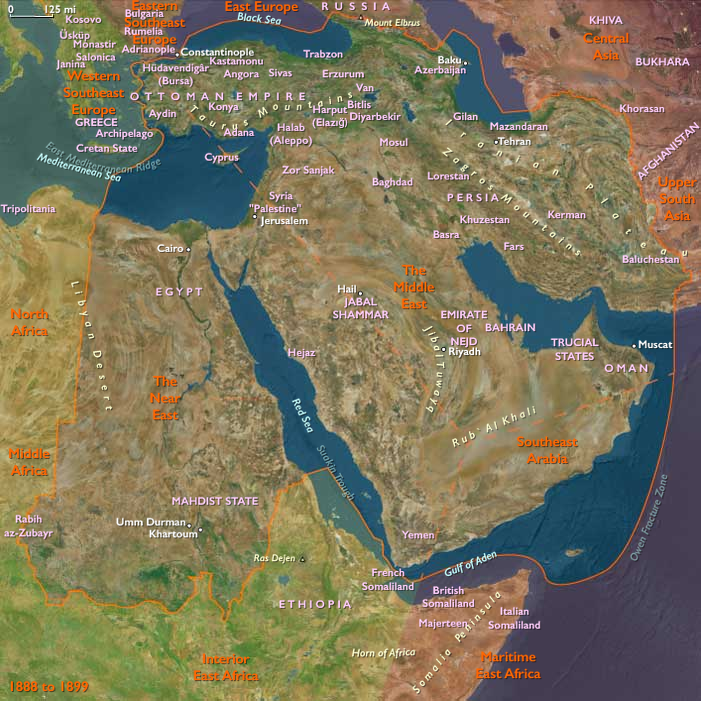
Subregions
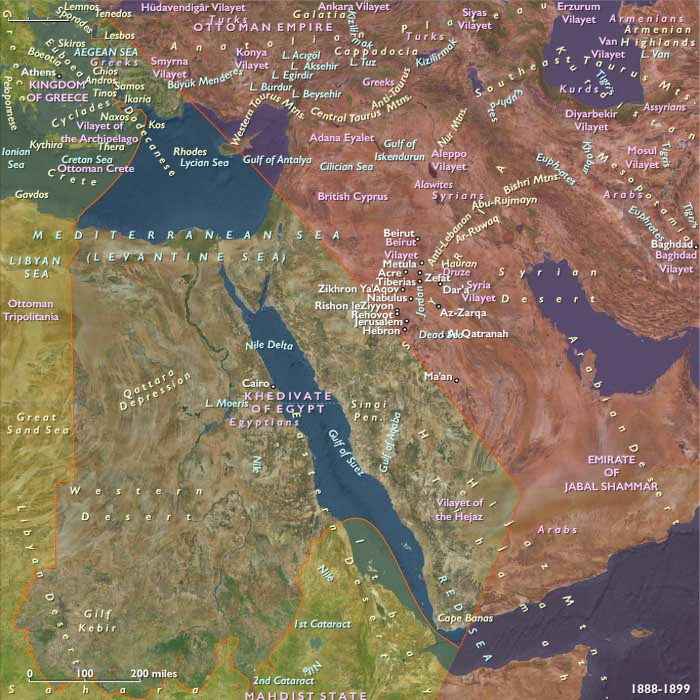
Years: 1888 - 1899
Locations
People
Groups
- Nubians
- Arab people
- Ja'alin tribe
- Beja people
- Christians, Monophysite
- Coptic Orthodox Church of Alexandria
- Christianity, Chalcedonian
- Islam
- Muslims, Sunni
- Fur people (Nilo-Saharan tribe)
- Funj people
- Ottoman Empire
- Beja people
- Sennar, Funj Sultanate of
- Baggara
- Shaigiya
- Egypt, (Ottoman) Viceroyalty of
- Sudan, Turco-Egyptian
- Belgium, Kingdom of
- Egypt, Khedivate of
- Italy, Kingdom of
- France (French republic); the Third Republic
- Ethiopia, Solomonid Dynasty of
- Sudan, Anglo-Egyptian
Topics
Commodoties
Subjects
Regions
Subregions