
Filters:
The development of "legitimate" trade is the …
Years: 1840 - 1851
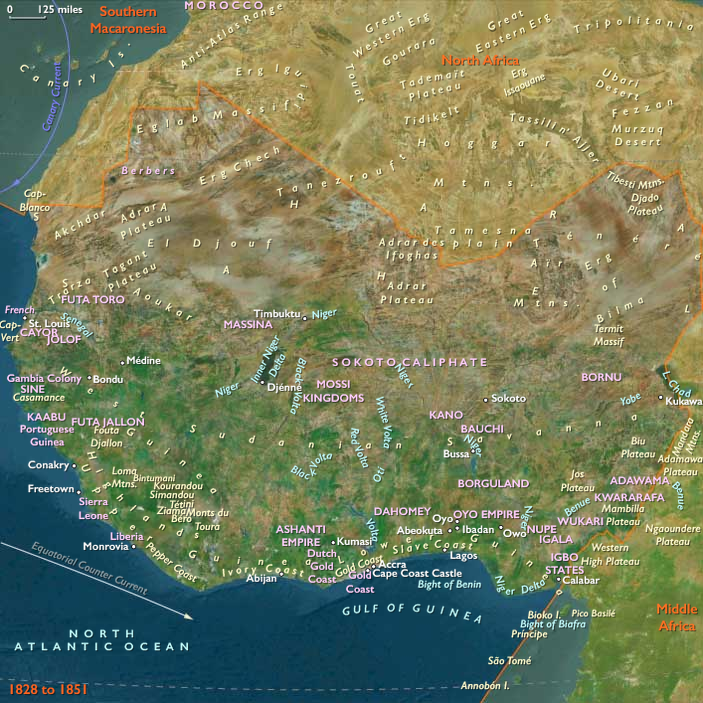
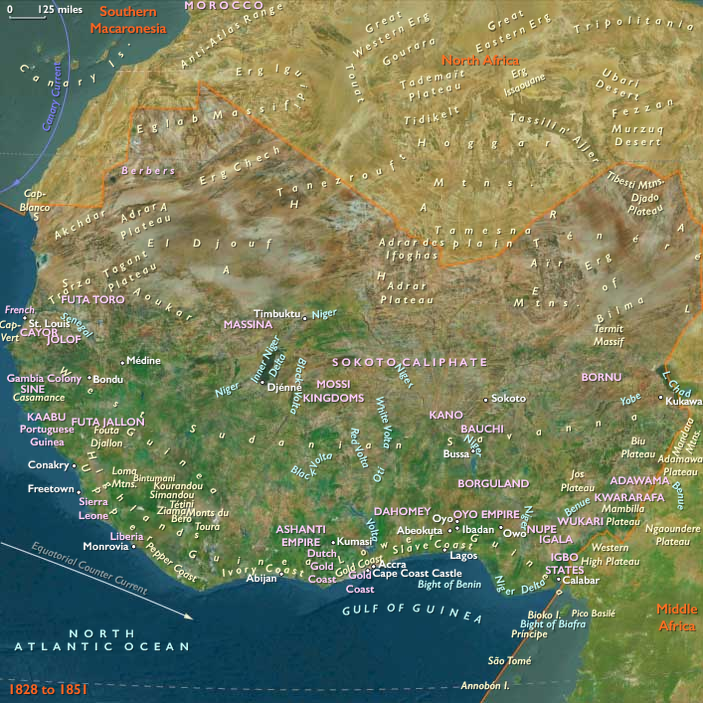
The development of "legitimate" trade is the final phase of private and official British efforts to find a positive alternative to the traffic in slaves.
Earlier aspects of such constructive interest had included the founding of the colony at Sierra Leone in 1787 as a refuge for liberated slaves, the missionary movement designed to bring Christianity to the region, and programs of exploration sponsored by learned societies and scientific groups, such as the London-based African Association.
Earlier aspects of such constructive interest had included the founding of the colony at Sierra Leone in 1787 as a refuge for liberated slaves, the missionary movement designed to bring Christianity to the region, and programs of exploration sponsored by learned societies and scientific groups, such as the London-based African Association.
Locations
Groups
- Igbo people
- Hausa Kingdoms, the
- Hausa people
- Yoruba people
- Ijaw people
- Kano (Hausa city state)
- Zaria (Zazzau), Hausa City-State of
- Katsina (Hausa city state)
- Gobir (Hausa city state)
- Benin Empire
- Ibibio people
- Bonny, Ijo city-state of
- Oyo Empire
- Calabar, Efik state of
- Dahomey, Kingdom of
- Khasso, Fulani Jihad State
- Aro Confederacy
- Fouta Djallon (Futa Jallon) Fulani Jihad State
- Fouta-Toro, or Futa Toro, Fulani Jihad State of
- Elem, Ijo city-state of
- Equatorial Guinea, Spanish colony of
- United States of America (US, USA) (Washington DC)
- Britain (United Kingdom of Great Britain and Ireland)
- Fulani Empire
- Nupe, Emirate of the
- Freetown (Sierra Leone), British Crown Colony of
- Sokoto, Kingdom of
- Macina (Masina), Fulani Jihad State of
- Spain, Bourbon Kingdom (first restoration) of
- Denmark, Kingdom of
- France, constitutional monarchy of
- Zaria, Emirate of
- Oyo, Yoruba Kingdom of
Topics
Commodoties
Subjects
Regions
Subregions
Years: 1840 - 1851
Locations
Groups
- Igbo people
- Hausa Kingdoms, the
- Hausa people
- Yoruba people
- Ijaw people
- Kano (Hausa city state)
- Zaria (Zazzau), Hausa City-State of
- Katsina (Hausa city state)
- Gobir (Hausa city state)
- Benin Empire
- Ibibio people
- Bonny, Ijo city-state of
- Oyo Empire
- Calabar, Efik state of
- Dahomey, Kingdom of
- Khasso, Fulani Jihad State
- Aro Confederacy
- Fouta Djallon (Futa Jallon) Fulani Jihad State
- Fouta-Toro, or Futa Toro, Fulani Jihad State of
- Elem, Ijo city-state of
- Equatorial Guinea, Spanish colony of
- United States of America (US, USA) (Washington DC)
- Britain (United Kingdom of Great Britain and Ireland)
- Fulani Empire
- Nupe, Emirate of the
- Freetown (Sierra Leone), British Crown Colony of
- Sokoto, Kingdom of
- Macina (Masina), Fulani Jihad State of
- Spain, Bourbon Kingdom (first restoration) of
- Denmark, Kingdom of
- France, constitutional monarchy of
- Zaria, Emirate of
- Oyo, Yoruba Kingdom of
Topics
Commodoties
Subjects
Regions
Subregions