
A link between the Tierra Blanca Joven …
Years: 536 - 536
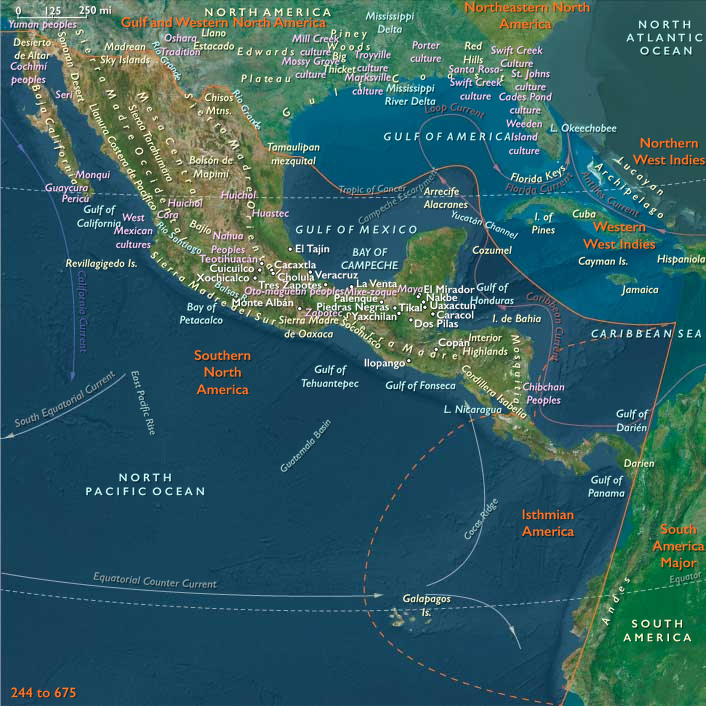
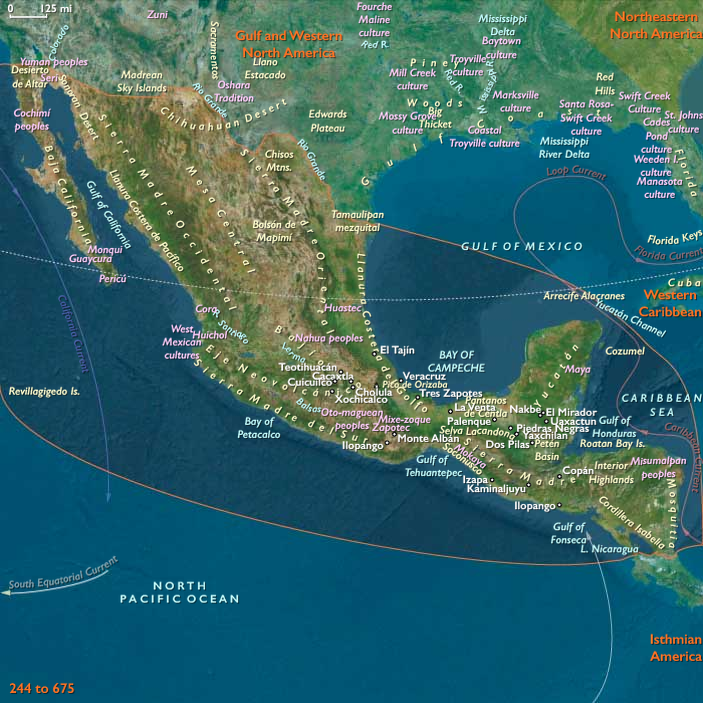
A link between the Tierra Blanca Joven (TBJ) eruption of the Ilopango caldera in central El Salvador and the CE 536 event is suggested in evidence presented by 2010 by Robert Dull, John Southon and colleagues.
Although earlier published radiocarbon evidence suggested a two-sigma age range of CE 408-536, which is consistent with the global climate downturn, the connection between CE 536 and Ilopango was not explicitly made until research on Central American Pacific margin marine sediment cores by Steffen Kutterolf and colleagues showed that the phreatoplinian TBJ eruption was much larger than previously thought.
Detailed AMS 14C dating of successive growth increments from a single tree killed by a TBJ pyroclastic flow supports a death age for the tree of CE 535.
A conservative bulk tephra volume for the TBJ event of ~84 km3 was calculated, indicating a large VEI 6+ event and a magnitude of 6.9.
The results suggest that the Ilopango TBJ eruption size, latitude and age are consistent with the ice core sulfate records of Larsen, et al., 2008.
The collapse of the Ilopango caldera produced widespread pyroclastic flows and devastated Mayan cities.
The eruption produced about twenty-five cubic kilometers (six cubic miles) of tephra (twenty times as much as the 1980 eruption of Mount St. Helens), thus rating a 6 on the (VEI) Volcanic Explosivity Index.
The "ash-cloud fallout [..] blanketed an area of at least 10,000 square kilometers waist-deep in pumice and ash", which would have stopped all agricultural endeavor in the area for decades. (Clive Oppenheimer (2011). Eruptions that shook the world. Cambridge University Press. ISBN 978-0-521-64112-8.)
Locations
Groups
Topics
- Formative Stage (Americas)
- Famines and plagues 400 to 800
- Classic Stage (Mesoamerica)
- Extreme weather events of 535-536
Subjects
Regions
Subregions
Related Events
Showing 10 events out of 57800 total
Years: 536 - 536
Locations
Groups
Topics
- Formative Stage (Americas)
- Famines and plagues 400 to 800
- Classic Stage (Mesoamerica)
- Extreme weather events of 535-536
Subjects
Regions
Subregions