
A group of Māori migrates east before …
Years: 1492 - 1503
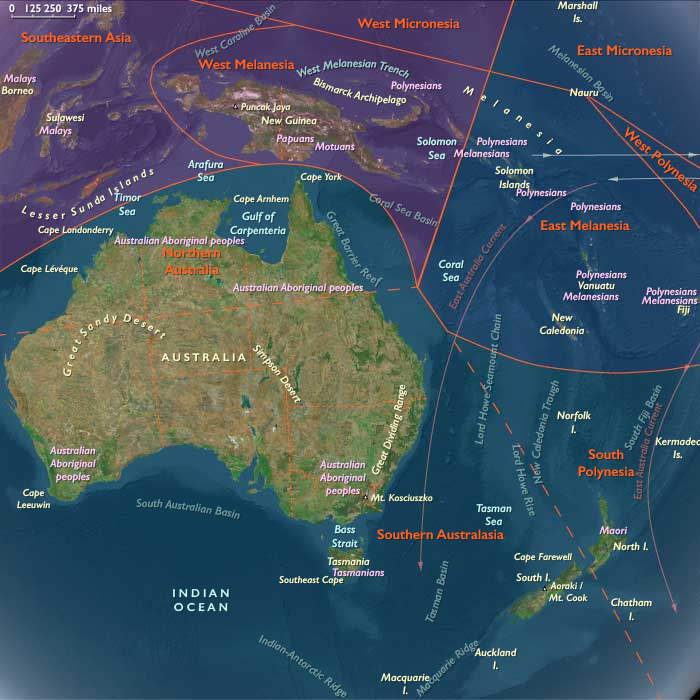
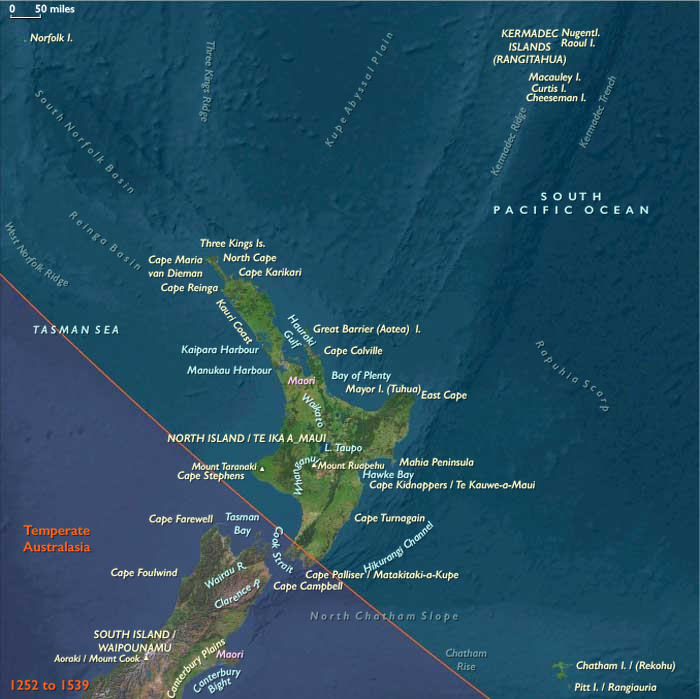
A group of Māori migrates east before 1500 to the tiny Chatham Islands east of New Zealand, where, by adapting to the local climate and the availability of resources, they develop a culture known as the "Moriori"—related to but distinct from Māori culture in mainland New Zealand.
Evidence supporting this theory comes from the characteristics that the Moriori language has in common with the dialect of Māori spoken by the Ngāi Tahu tribe of the South Island, and comparisons of the genealogies of Moriori ("hokopapa") and Māori ("whakapapa").
Prevailing wind patterns in the southern Pacific add to the speculation that the Chatham Islands were the last part of the Pacific to be settled during the period of Polynesian discovery and colonization.
he word Moriori derives from Proto-Polynesian *ma(a)qoli, which has the reconstructed meaning "true, real, genuine".
It is cognate with the Māori language word Māori and likely also had the meaning "(ordinary) people".
The earliest indication of human occupation of the Chathams, inferred from middens exposed due to erosion of sand dunes, has been established as 450 years BP.
The Moriori, who are culturally Polynesian, will develop a distinct culture in the Chatham Islands as they adapt to local conditions.
Locations
Groups
Subjects
Regions
Subregions
Years: 1492 - 1503
Locations
Groups
Subjects
Regions
Subregions