
A group of Christian dualists known as …
Years: 664 - 675
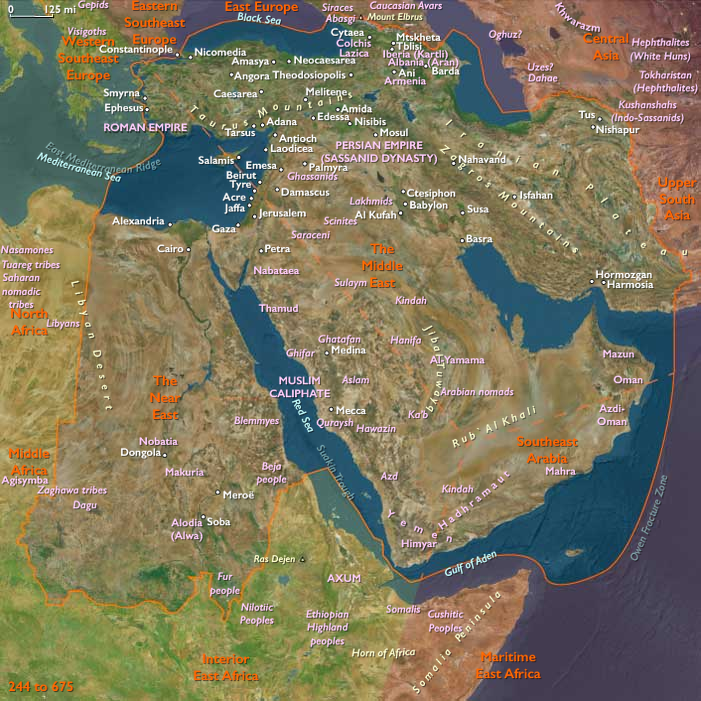
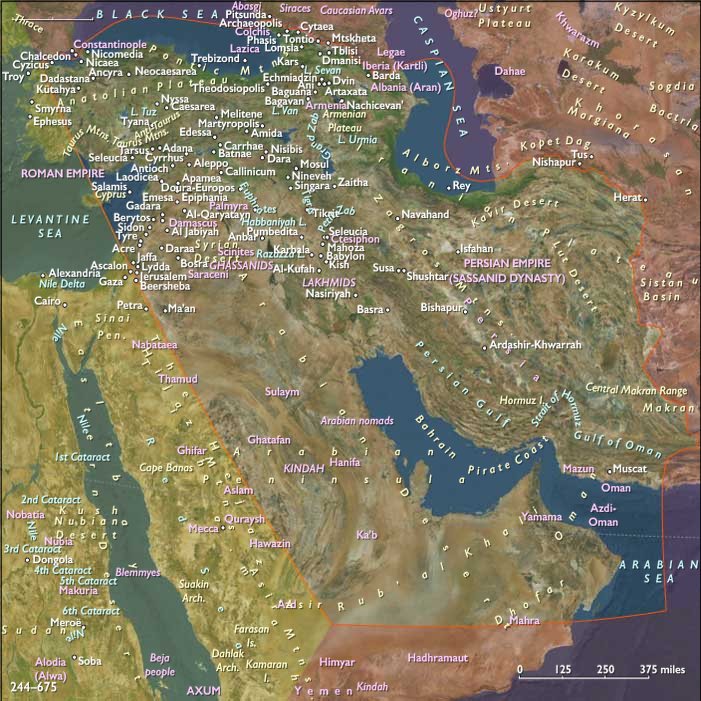
A group of Christian dualists known as Paulicians, which appears in Armenia, is influenced most directly by the dualism of Marcionism, a Gnostic movement in early Christianity, and of Manichaeism, a Gnostic religion founded in the third century by the Persian prophet Mani. (The identity of the Paul after whom the Paulicians are called is disputed.)
Their fundamental doctrine is that there are two principles, an evil God and a good God; the former is the creator and ruler of this world, the latter of the world to come.
From this, they deduce that Jesus was not truly the son of Mary, because the good God could not have taken flesh and become man.
They especially honor the Gospel According to Luke and the Letters of St. Paul, rejecting the Old Testament and the Letters of St. Peter.
They reject also the sacraments, the worship, and the hierarchy of the established church.
The sect’s probable founder is Constantine of Mananali, who is said to have come from Mananali (Mananalis), near Samosata, Syria.
Taking the additional name of Silvanus (Silas; one of St. Paul's companions), he gives a more distinctively Christian character to the Manichaeism that at this time is prevalent in the Asian provinces of the Roman Empire.
Becoming a noted teacher, he has founded a Paulician community at Kibossa, near Colonia, Armenia.
The sect seems to have started a widespread political and military rebellion within the empire shortly after its appearance.
Locations
Groups
- Gnosticism
- Manicheanism
- Christianity, Chalcedonian
- Greeks, Medieval (Byzantines)
- Roman Empire, Eastern: Heraclian dynasty
- Armeniac Theme
- Paulicians
Subjects
Regions
Subregions
Related Events
Filter results
Showing 10 events out of 56290 total
Silla emerges victorious in 668.
It is from this famous date that South Korean historians speak of a unified Korea.
The period of the Three Kingdoms thus ends, but not before all of them had come under the long-term sway of Chinese civilization by introducing Chinese statecraft, Buddhist and Confucian philosophy, Confucian practices of educating the young, and the Chinese written language (Koreans adapt the characters to their own language through a system known as idu).
The Three Kingdoms had also introduced Buddhism, the various rulers seeing, in a body of believers devoted to Buddha but serving one king, a valuable political device for unity.
Artists from Goguryeo and Baekje perfect a mural art found on the walls of tombs and take it to Japan where it deeply influences Japan's temple and burial art.
Indeed, many Korean historians will come to believe that the wall murals in royal tombs in Japan indicate that the imperial house lineage may have Korean origins.
A succession dispute in Japan breaks out in 672 following the death of Emperor Tenji.
The name refers to the jinshin or ninth year of the sixty-year Jikkan Jinishi calendrical cycle, corresponding to the Western year 673.
Tenji had originally designated his brother, Prince Oama as his successor, but later changes his mind in favor of his son Prince Otomo, who takes the throne as Emperor,
Otama reigns for less than a year during the course of the violence that erupts as a result of factional rivalries before taking his own life.
His uncle Oama succeeds to the throne as the Emperor Temmu.
East Central Europe (664–675 CE): Continued Regional Fragmentation, Emergence of Proto-States, and Avar Reconsolidation
Between 664 and 675 CE, East Central Europe—encompassing Poland, Czechia, Slovakia, Hungary, and those portions of Germany and Austria lying east of 10°E and north of a line stretching from roughly 48.2°N at 10°E southeastward to the Austro-Slovenian border near 46.7°N, 15.4°E—continued to witness profound political and cultural transformations resulting from the collapse of earlier federations. Following the dissolution of Samo’s Kingdom and the fragmentation of Old Great Bulgaria, smaller, decentralized tribal polities began solidifying into early proto-states in Bohemia and Moravia. Concurrently, the Avars sought to recover some lost influence by carefully re-consolidating their authority within a more limited area of the Carpathian Basin. In Thuringia, sustained autonomy under Radulf’s successors highlighted persistent Merovingian royal weakness, demonstrating the continued transition toward powerful regional aristocracies.
Political and Military Developments
Emergence of Early Proto-States in Bohemia and Moravia
-
Following the earlier collapse of Samo’s unified Slavic federation, distinct regional tribal leaders in Bohemia and Moravia increasingly solidified their power, laying the foundations for the future principalities of the Czechs and the Moravians.
-
These early proto-states developed stronger localized political and military institutions, effectively maintaining autonomy against weakened external powers.
Ongoing Fragmentation and Migration of the Bulgars
-
After Old Great Bulgaria’s collapse, multiple Turkic-speaking Bulgar groups continued migrating, especially into southeastern Europe. The most significant group, led by Asparuh, moved south across the Danube into the Balkans during this period, where they would eventually establish a long-lasting Bulgarian state in subsequent decades, becoming heavily Slavicized over time.
Thuringian Autonomy Under Radulf’s Successors
-
Thuringia continued enjoying practical independence from weakened Frankish kings, who failed repeatedly to reassert central authority. After Radulf’s death (mid-7th century), Thuringian dukes retained substantial autonomy, highlighting Merovingian royal impotence during the continuing era of rois fainéants.
Avar Reconsolidation Efforts
-
The Avar Khaganate, diminished by earlier upheavals, engaged in cautious reconsolidation, reasserting political control and re-stabilizing authority within a reduced Carpathian Basin territory.
Economic and Technological Developments
Sustained Regional Trade and Economic Integration
-
Economic integration persisted despite political fragmentation, with continued robust trading relationships among Bavarian, Thuringian, Avar, proto-state Slavic, Frankish, and Byzantine territories. Goods included agricultural produce, ironware, luxury textiles, and crafted products.
Fortification and Defensive Innovations
-
Growing regional stability and consolidation of localized political entities fostered continued fortification development, including fortified settlements, earthworks, and hillforts designed to secure emerging proto-states from external threats.
Cultural and Artistic Developments
Development of Distinct Regional Slavic Identities
-
Bohemia and Moravia increasingly developed separate cultural identities reflected archaeologically through distinct ceramics, jewelry, settlement designs, and burial practices, laying clear foundations for medieval regional identities.
Bulgar Cultural Transformation and Slavicization
-
The southward migration of Bulgar groups into the Balkans initiated their gradual cultural transformation, eventually resulting in their linguistic and cultural assimilation into predominantly Slavic populations.
Persistent Avar Cultural Legacy
-
Avar influence persisted strongly across the region, notably in artistic traditions, metalwork, weaponry, and decorative artifacts, continuing to shape cultural interactions with neighboring Slavic and Bavarian peoples.
Settlement and Urban Development
Growth of Proto-State Settlements in Bohemia and Moravia
-
Fortified settlements grew notably in Bohemia and Moravia, reflecting enhanced political stability, economic productivity, and nascent proto-state structures.
Stability of Bavarian and Thuringian Urban Centers
-
Bavarian settlements, notably Regensburg, and Thuringian communities continued benefiting from economic prosperity and reduced military threats, supporting sustained population growth and urban development.
Social and Religious Developments
Emergence of Stable Regional Leadership Hierarchies
-
Bohemian and Moravian societies developed increasingly stable hierarchical leadership, solidifying proto-state formations led by influential warrior elites capable of diplomatic and military coordination.
Thuringian Aristocratic Consolidation
-
Thuringia maintained stable aristocratic governance structures under Radulf’s successors, reinforcing local power structures at the expense of Merovingian royal authority.
Continuation of Avar Social Structures
-
Within their reduced territory, Avar societal and military hierarchy persisted strongly, enabling continued internal cohesion and external diplomatic engagement.
Long-Term Consequences and Historical Significance
The era 664–675 CE represented ongoing regional transformation in East Central Europe, characterized by the rise of early proto-state political structures in Bohemia and Moravia, the continued migrations and cultural transformation of Bulgar groups, and sustained Thuringian autonomy under weakened Merovingian royal authority. Concurrent Avar reconsolidation efforts provided stability within their remaining territories, ensuring continued cultural influence. Collectively, these developments set foundational patterns shaping future medieval political entities, cultural identities, and historical trajectories within East Central Europe.
The Arabs, having gradually asserted control over the sea routes to Constantinople, climax their earlier assaults on Armenia and Asia Minor with a siege of the great city itself, beginning in 674.
Half the East Roman Empire and the former territories of the entire Sassanid Empire will come under Muslim rule over the following centuries.
Eastern Southeast Europe (664–675 CE): Consolidation, Strategic Growth, and Critical Innovations
Settlement and Migration Patterns
Demographic Consolidation and the Arrival of the Bulgars
From 664 to 675 CE, Eastern Southeast Europe experienced demographic consolidation following earlier migratory movements. A significant event was the arrival and settlement of the Bulgars under Khan Asparukh, who crossed the Danube and established themselves in the region, laying the foundations for the First Bulgarian Empire. The Bulgars integrated and displaced local Slavic populations, significantly altering regional demographics and politics.
Urban Development and Fortification
Urban centers such as Constantinople, Philippopolis, Adrianople, and Serdica continued significant enhancements in defensive structures and urban planning. These strategic developments provided security, enabling stable urban populations and growth, even amidst external threats from migrating peoples and military incursions.
Political and Military Developments
Leadership Changes and Military Campaigns
In 668 CE, Constantine IV ascended to sole rulership following the assassination of his father, Constans II. His reign was immediately challenged by military campaigns from Arab forces under Muawiyah I. Arab forces captured key regional cities like Amorion and Cyzicus and launched repeated sieges against Constantinople between 674 and 675 CE.
The Crucial Role of Greek Fire
The Arab naval sieges of Constantinople in 674 and 675 CE were dramatically repelled by the defenders' effective use of Greek fire, a revolutionary incendiary weapon invented by Kallinikos of Heliopolis around 665–670 CE. This petroleum-based compound, which ignited upon contact with water and could only be extinguished with sand, significantly altered military defenses and tactics.
Economic and Technological Developments
Sustained Economic Stability
The regional economy maintained consistent growth, bolstered by reliable agricultural output and dynamic trade networks. Constantinople's continued role as a major economic hub was essential in supporting broader regional economic resilience.
Technological Innovations
Technological progress, notably the invention of Greek fire, emphasized advancements in military fortifications and defensive capabilities. These innovations enhanced regional security, ensuring economic continuity and social cohesion.
Cultural and Artistic Developments
Flourishing Cultural Activities
Cultural and artistic endeavors thrived, reflecting the integration of classical traditions and Christian symbolism. Artistic production continued vigorously, strengthening community identity and cultural continuity.
Intellectual Resilience
Educational institutions and scholarly communities actively preserved and promoted classical and theological knowledge. Intellectual vitality persisted, adapting effectively to contemporary societal and political contexts.
Social and Religious Developments
Efficient and Adaptive Governance
Administrative systems demonstrated ongoing efficiency and adaptability, effectively managing resources, civic responsibilities, and regional defense. Strong provincial governance significantly contributed to regional stability and growth.
Expanding Christian Societal Role
Christianity continued expanding its profound influence, shaping the region's social, cultural, and political dynamics. The ongoing growth of religious institutions played a crucial role in community cohesion and societal stability.
Long-Term Consequences and Historical Significance
The period from 664 to 675 CE was characterized by significant demographic consolidation, strategic political shifts, robust urban fortifications, revolutionary military innovations, sustained economic resilience, and vibrant cultural and intellectual activity. These critical developments effectively reinforced Eastern Southeast Europe's regional stability, significantly influencing its future historical trajectory.
The Middle East: 664–675 CE
The Rise of Paulicianism and Continued Umayyad Consolidation
Emergence of the Paulicians
In Armenia, between 664 and 675 CE, a Christian dualist group known as the Paulicians emerges, significantly influenced by earlier dualist movements such as Marcionism and Manichaeism. The Paulicians advocate a fundamental dualism, believing in two opposing principles: an evil God who creates and governs the material world, and a good God who presides over the spiritual world to come. Consequently, they reject the idea that Jesus could have been the true son of Mary, as such an incarnation would contradict their belief in the purity of the spiritual deity.
Doctrinal Distinctiveness and Rejection of Orthodoxy
Paulician teachings emphasize the Gospel According to Luke and the Letters of St. Paul, while explicitly rejecting the Old Testament and the Letters of St. Peter. Their repudiation extends to the established Church’s sacraments, rituals, hierarchy, and clergy. This radical stance challenges both religious orthodoxy and established ecclesiastical authority, positioning the Paulicians in direct conflict with mainstream Christianity.
Constantine of Mananali and the Founding of Kibossa
The sect’s probable founder, Constantine of Mananali, hailed from the region near Samosata, Syria. Adopting the additional name Silvanus—after Silas, a companion of St. Paul—Constantine reshapes the prevalent Manichaean beliefs into a distinctly Christian dualist theology. He becomes renowned as a teacher and establishes a significant Paulician community at Kibossa near Colonia in Armenia. Under his leadership, the Paulicians grow rapidly, both religiously and politically, initiating rebellions that challenge the authority of Byzantine rule.
Continued Umayyad Strengthening
Parallel to these religious upheavals, the Umayyad Dynasty, recently established in 661 CE, consolidates its political dominance. Under Caliph Muawiya ibn Abi Sufyan, the Umayyads further strengthen central authority from their capital at Damascus, promoting administrative and military reforms that stabilize and expand Islamic rule across the Middle East. This era thus becomes marked by both significant religious dissent, exemplified by the Paulicians, and continued political consolidation under the Umayyads, setting the stage for further transformations in the Middle East.
The Middle East: 664–675 CE
The Rise of Paulicianism and Continued Umayyad Consolidation
Emergence of the Paulicians
In Armenia, between 664 and 675 CE, a Christian dualist group known as the Paulicians emerges, significantly influenced by earlier dualist movements such as Marcionism and Manichaeism. The Paulicians advocate a fundamental dualism, believing in two opposing principles: an evil God who creates and governs the material world, and a good God who presides over the spiritual world to come. Consequently, they reject the idea that Jesus could have been the true son of Mary, as such an incarnation would contradict their belief in the purity of the spiritual deity.
Doctrinal Distinctiveness and Rejection of Orthodoxy
Paulician teachings emphasize the Gospel According to Luke and the Letters of St. Paul, while explicitly rejecting the Old Testament and the Letters of St. Peter. Their repudiation extends to the established Church’s sacraments, rituals, hierarchy, and clergy. This radical stance challenges both religious orthodoxy and established ecclesiastical authority, positioning the Paulicians in direct conflict with mainstream Christianity.
Constantine of Mananali and the Founding of Kibossa
The sect’s probable founder, Constantine of Mananali, hailed from the region near Samosata, Syria. Adopting the additional name Silvanus—after Silas, a companion of St. Paul—Constantine reshapes the prevalent Manichaean beliefs into a distinctly Christian dualist theology. He becomes renowned as a teacher and establishes a significant Paulician community at Kibossa near Colonia in Armenia. Under his leadership, the Paulicians grow rapidly, both religiously and politically, initiating rebellions that challenge the authority of Byzantine rule.
Continued Umayyad Strengthening
Parallel to these religious upheavals, the Umayyad Dynasty, recently established in 661 CE, consolidates its political dominance. Under Caliph Muawiya ibn Abi Sufyan, the Umayyads further strengthen central authority from their capital at Damascus, promoting administrative and military reforms that stabilize and expand Islamic rule across the Middle East. This era thus becomes marked by both significant religious dissent, exemplified by the Paulicians, and continued political consolidation under the Umayyads, setting the stage for further transformations in the Middle East.
The Western Chalukyas have kept the Pallavas out of the Deccan since recapturing the temple-fort of Vatapi in 655.
The Eastern Chalukyas have meanwhile advanced south of Vengi into the Nellore district, thus confining the Pallavas to the narrow strip of formerly Andhra coast from which they had launched their assaults three decades earlier.
In 670, the Chalukyas capture and partly destroy the Pallavan capital at Kanchipuram, sacred to Hindus as “the Benares of the south.”
The Pallavas, their dynasty intact, eventually reoccupy the capital, but refrain from major actions against their northern neighbors.
The Slavic arrivals in Greece are unable to preserve their own distinct cultural identities; their Hellenization process begins very soon.
Greek will remain the mother tongue of the region, and Christianity will persist as the dominant faith.
Croats and Serbs settle during the seventh century in the lands that make up modern Bosnia and Herzegovina.
Years: 664 - 675
Locations
Groups
- Gnosticism
- Manicheanism
- Christianity, Chalcedonian
- Greeks, Medieval (Byzantines)
- Roman Empire, Eastern: Heraclian dynasty
- Armeniac Theme
- Paulicians
