
Also in 1850, British pressure finally forces …
Years: 1840 - 1851
Also in 1850, British pressure finally forces the Brazilian government to outlaw the African slave trade.
London, tiring of Brazilian subterfuge, authorizes its navy to seize slave ships in Brazilian waters, even in ports.
Rather than risk open war with Britain, paralyzation of commerce, widespread slave unrest, and destabilization of the empire, the government outlaws the African slave trade.
It deports a number of Portuguese slavers and instructs the provincial presidents, police, judges, and military to crack down.
Over the next five years, even clandestine landings will stop, and despite the tempting rise of slave prices in the coffee districts of Rio de Janeiro Province, the trans-Atlantic trade will end.
Although the British claim credit, it should be noted that for the first time a Brazilian government has the power to enforce a law along the length of the coast.
Also, internal support for the trade has weakened.
Most slave importers are Portuguese, who had been selling the ever more expensive Africans to landowners on credit at climbing interest rates, in some cases forcing the latter into insolvency and loss of property.
Xenophobia and the debts of the landed classes combine to support the government action.
Locations
People
Groups
- Brazil, Indigenous people in
- Guaraní (Amerind tribe)
- Portuguese people
- Britain (United Kingdom of Great Britain and Ireland)
- Brazilian Empire
Topics
Commodoties
Subjects
Regions
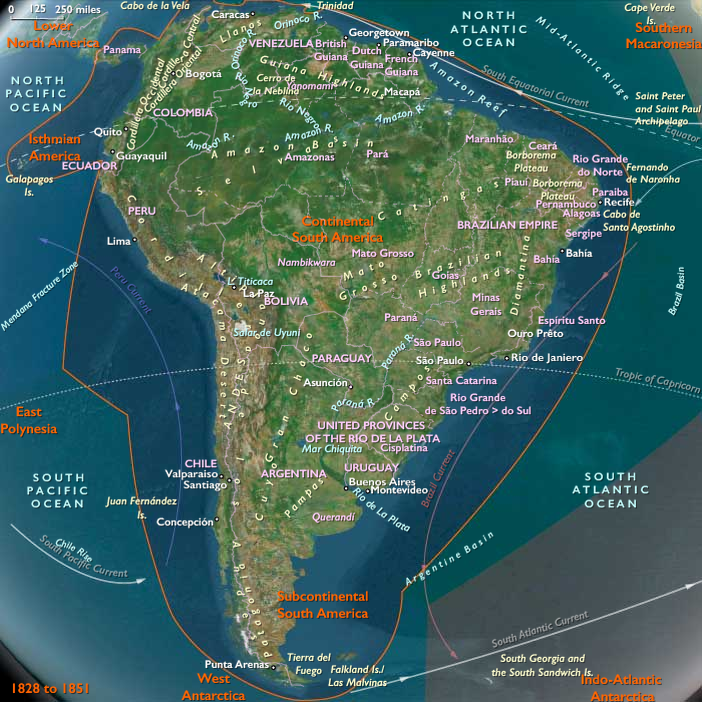
Subregions
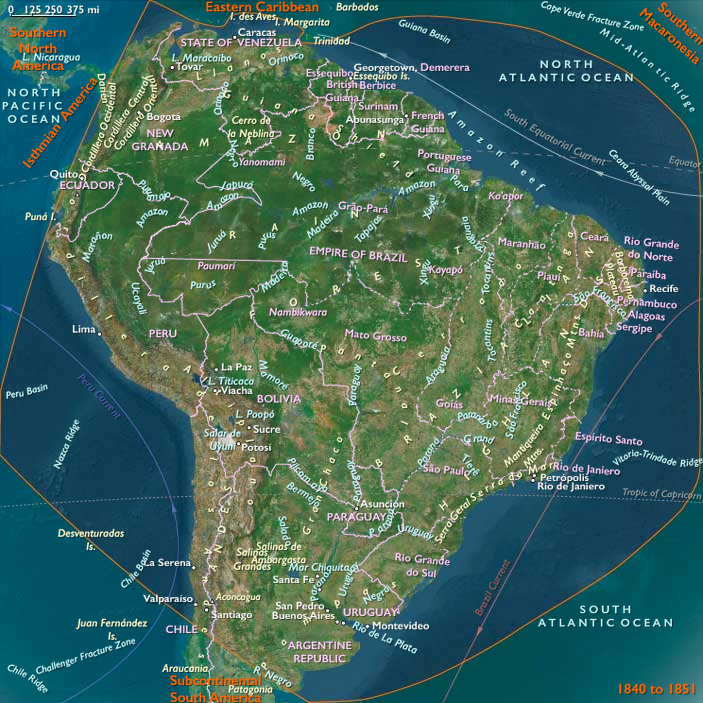
Related Events
Showing 10 events out of 18028 total
Years: 1840 - 1851
Locations
People
Groups
- Brazil, Indigenous people in
- Guaraní (Amerind tribe)
- Portuguese people
- Britain (United Kingdom of Great Britain and Ireland)
- Brazilian Empire
Topics
Commodoties
Subjects
Regions
Subregions