
Zong, originally named Zorg (meaning "Care" …
Years: 1781 - 1781
August
Zong, originally named Zorg (meaning "Care" in Dutch) by its owners, the Middelburgsche Commercie Compagnie, had operated as a slave ship based in Middelburg, Netherlands, and had made a voyage in 1777, delivering slaves to the coast of Suriname, South America.
Zong is a "square stern ship" of one hundred and ten burden.
It had been captured by the British sixteen-gun brig HMS Alert on February 10, 1781.
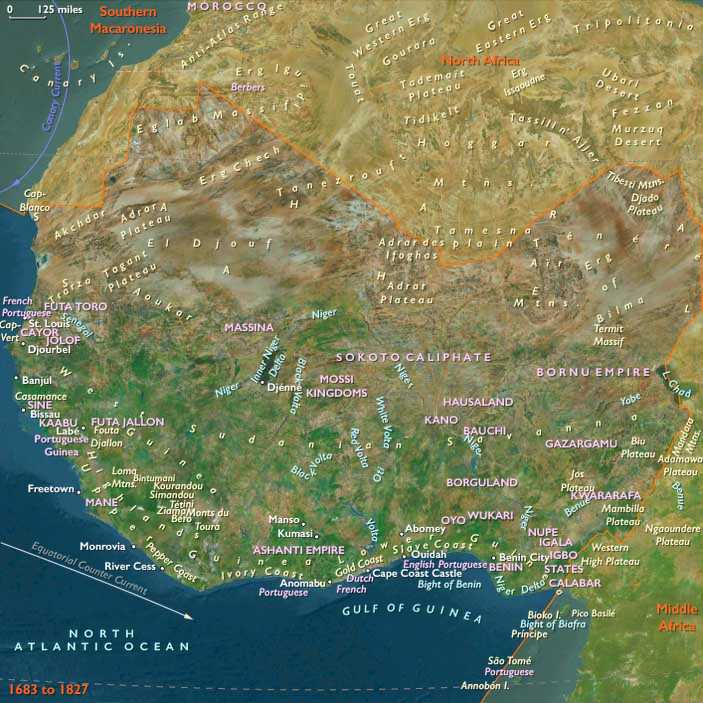
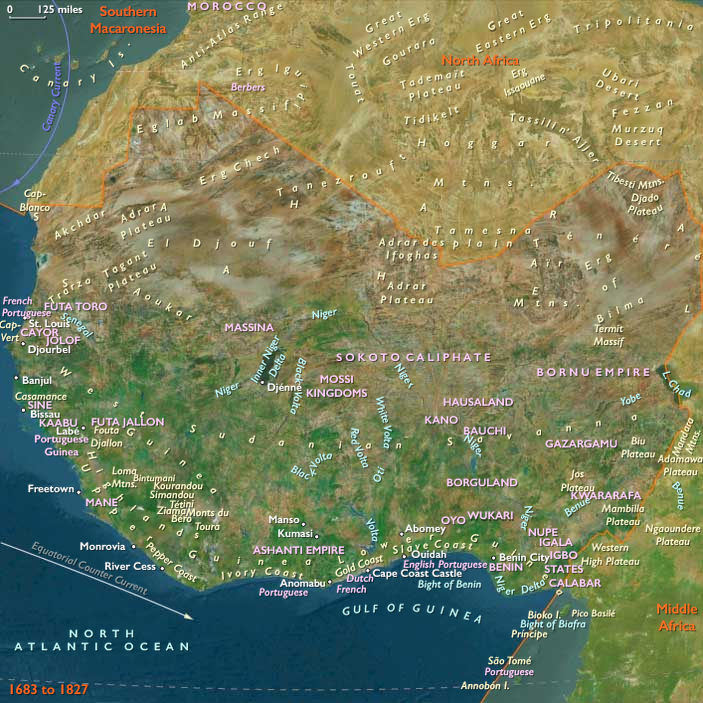
By February 26, Alert and Zong had arrived at Cape Coast Castle, in what is present-day Ghana, which is maintained and staffed, along with other forts and castles, by the African Company of Merchants or Company of Merchants Trading to Africa.
The Castle is used as the regional headquarters of the African Company.
In early March 1781, Zong had been purchased by the master of William, on behalf of a syndicate of Liverpool merchants.
The members of the syndicate are Edward Wilson, George Case, James Aspinall and William, James and John Gregson.
William Gregson had had an interest in fifty slaving voyages between 1747 and 1780.
He had served as mayor of Liverpool in 1762.
By the end of his life, vessels in which Gregson had had a financial stake had carried fifty-eight thousand two hundred and one Africans to slavery in the Americas.
Zong had been paid for with bills of exchange, and the two hundred and forty-four slaves already on board were part of the transaction.
The ship is not insured until after it starts its voyage.
The insurers, a syndicate from Liverpool, underwrite the ship and slaves for up to £8,000, approximately half the slaves' potential market value.
The remaining risk is borne by the owners.
Zong is the first command of Luke Collingwood, formerly the surgeon on the William.
While Collingwood lacks experience in navigation and command, ship's surgeons are typically involved in selecting slaves for purchase in Africa, so their medical expertise supports the determination of "commodity value" for a captive.
If the surgeon rejects a captive, that individual suffers "commercial death", being of no value, and is liable to be killed by African handlers.
Sometimes these killings happen in the presence of the surgeon.
It is likely that Collingwood had already witnessed the mass-killing of slaves.
Zong's first mate is James Kelsall, who had also served on the William.
The vessel's only passenger, Robert Stubbs, is a former captain of slave ships.
In early 1780 he had been appointed by the African Committee of the African Company, as the governor of Anomabu, a British fortification near Cape Coast Castle in Ghana.
This position makes him also vice-president of the Africa Company's Council of the Castle.
Due to his ineptitude and enmity incurred with John Roberts, governor of the Castle, Stubbs had been forced out of the governorship of Anomabu by the Council after nine months.
Witness statements gathered by the African Committee of the Africa Company had accused him of being a semi-literate drunkard who mismanaged the slave-trading activities of the fort.
Stubbs is aboard to return to Britain; Collingwood may have thought his earlier experience on slave ships would be useful.
Zong has a seventeen-man crew when it leaves Africa, which is far too small to maintain adequate sanitary conditions on the ship.
Mariners willing to risk disease and slave rebellions on slave ships are difficult to recruit within Britain and are harder to find for a vessel captured from the Dutch off the coast of Africa.
Zong is manned with remnants of the previous Dutch crew, the crew of William, and with unemployed sailors hired from the settlements along the African coast.
When Zong sails from Accra with four hundred and forty-two slaves on August 18, 1781, it has taken on more than twice the number of people that it can safely transport.
In the 1780s, British-built ships typically carry 1.75 slaves per ton of the ship's capacity; on the Zong, the ratio is 4.0 per ton.
A British slave ship of the period carries around one hundred and ninety-three slaves and it is extremely unusual for a ship of Zong's relatively small size to carry so many.
Locations
Groups
Topics
Commodoties
Subjects
Regions
Subregions
Related Events
Showing 10 events out of 24975 total
Years: 1781 - 1781
August
Locations
Groups
Topics
Commodoties
Subjects
Regions
Subregions