
Filters:
An invasion of the northern kingdom of …
Years: 837BCE - 826BCE
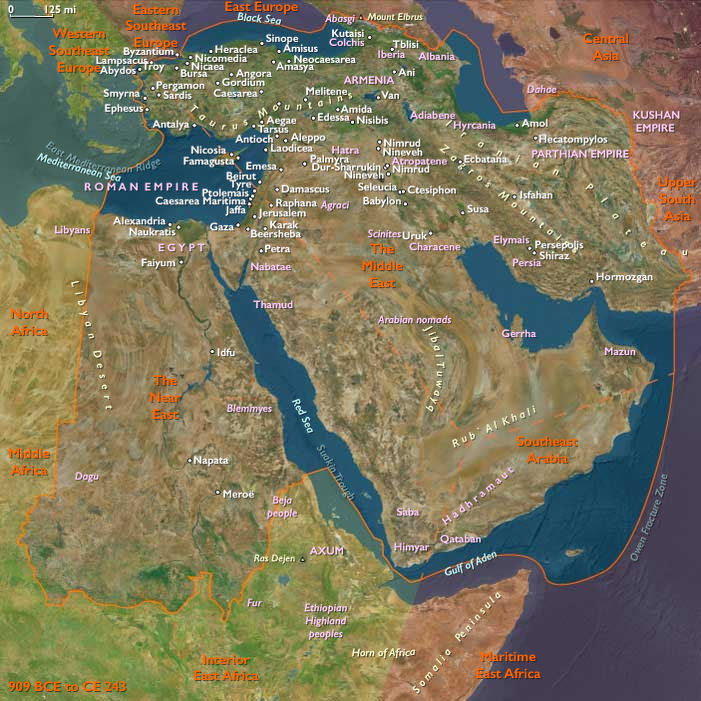
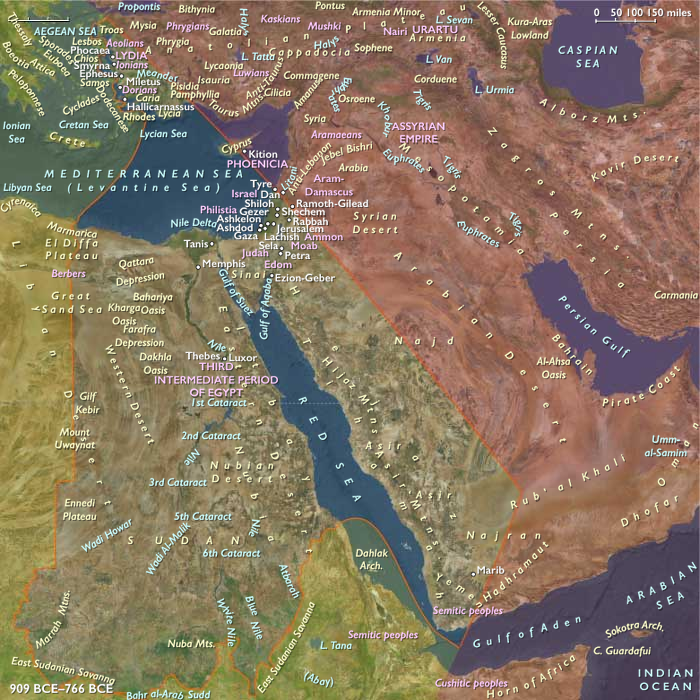
An invasion of the northern kingdom of Israel by an Aramaen king—almost certainly Hazael, king of Damascus—around 835 BCE is related in detail on a fragment of a black basalt monument, found broken and later reused in a later stratum as a building stone at the biblical site of Tel Dan in northern Israel.
Containinh an Aramaic inscription, the language of the Aramaic kings of Syria, it reads, in part [I killed Jeho]ram son of [Ahab] king of Israel, and [I] killed [Ahaz]iahu son of [Jehoram kin]g of the House of David. And I set [their towns into ruins and turned] their land into [desolation].
Locations
Groups
Topics
Commodoties
Subjects
Regions
Subregions
Related Events
Showing 10 events out of 216 total
Years: 837BCE - 826BCE
Locations
Groups
Topics
Commodoties
Subjects
Regions
Subregions