
A distinctive form of Japanese calligraphy, the …
Years: 1018 - 1018
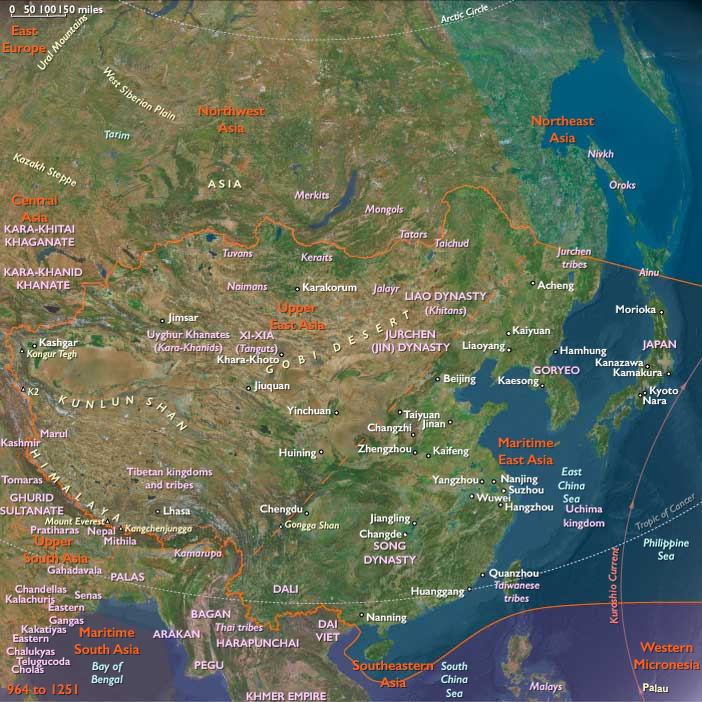
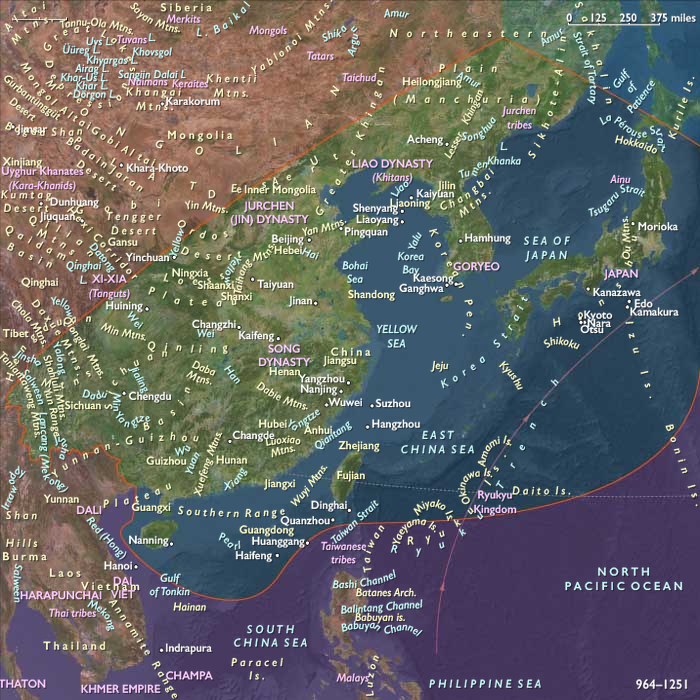
A distinctive form of Japanese calligraphy, the phonetic “kana” script, has emerge from abbreviation of the cumbersome usage of Chinese characters as phonetic symbols.
The first kana was a system called man'yōgana, a set of kanji used for their phonetic values, much as Chinese uses characters for their phonetic values in foreign loanwords today.
Man'yōshū, a poetry anthology assembled in 759, is written in this early script.
Hiragana developed as a distinct script from cursive man'yōgana, whereas katakana developed from abbreviated parts of regular script man'yōgana as a glossing system to add readings or explanations to Buddhist sutras.
Hiragana was developed for speed, whereas katakana developed to be small.
Kana is traditionally said to have been invented by the Buddhist priest Kūkai in the ninth century.
Kūkai certainly brought the Siddham script home on his return from China in 806; his interest in the sacred aspects of speech and writing led him to the conclusion that Japanese would be better represented by a phonetic alphabet than by the kanji which had been used up to that point.
The modern arrangement of kana reflects that of Siddham, but the traditional iroha arrangement follows a poem which uses each kana once.
Heian noblewomen develop kana into a respectable mode for poems, diaries, and romances.
Once the ability to compose short poems, written in a cultivated hand, becomes a requirement in Japanese social exchanges, major kana script masters, such as Fujiwara no Yukinari, emerge in the eleventh century.
Yukinari was the son of a courtier by the name of Fujiwara no Yoshitaka.
After the early death of his father, he had been raised by his grandfather, Prince Kanenori.
Yukinari has a fairly successful career as a court official, where he serves as a Major Counselor.
Yukinari further improves the Japanese style calligraphy (wayoshodo), and shows great respect to its founder, Ono no Michikaze (894-966).
He even mentions in his diary, Gonki, that he had a dream wherein he met Michikaze and learnt calligraphy from him.
Yukinari is known as the master of kana.
His style is mild and easily emulated; his lines are dainty and exquisite, resulting in highly elegant characters.
Fujiwara Yukinari is regarded as the founder of the Sesonji lineage of calligraphy, which will later become the leading tradition of wayo calligraphy.
His extant works are mostly written in Mana (Chinese characters used as units of meaning) in Gyosho or Sosho.
One of his most well-known works is the handscroll of Bai Juyi's eight poems from volume 65 of his Poetic Anthology.
He writes this masterpiece in 1018 when he is forty-seven years old.
The scroll is made by joining together nine pieces of specially prepared paper known as ryoshi, then dyed in light brown, claret, and other shades.
This handscroll will be treasured by Emperor Fushimi (reigned from 1288 to 1298), and the colophon over the seams on the back of the paper attests to this.
Currently, the scroll is stored in the Tokyo National Museum.
Locations
People
Groups
Commodoties
Subjects
Regions
Subregions
Related Events
Showing 10 events out of 51721 total
Years: 1018 - 1018
Locations
People
Groups
Commodoties
Subjects
Regions
Subregions