
A descendant of Inyotef defeats the Heracleopolitan …
Years: 2001BCE - 1990BCE
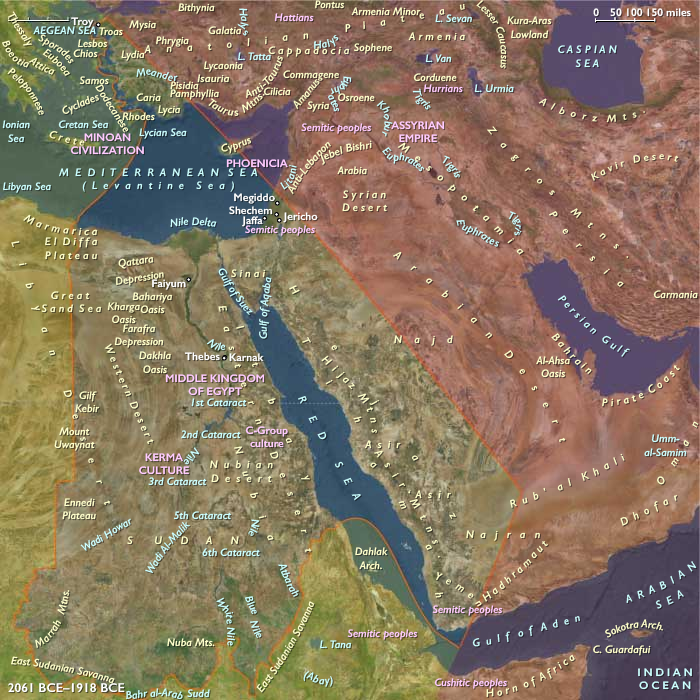
A descendant of Inyotef defeats the Heracleopolitan Pharaohs around 2055 BCE reunites the Two Lands, and rules as Mentuhotep II, thereby ending the First Intermediate Period.
In the fourteenth year of his reign there is attested an uprising in This.
This was perhaps connected with Mentuhotep’s war against the rival Tenth dynasty at Herakleopolis Magna.
Little is known of the events.
He is also known for commanding military campaigns south into Nubia, which had gained its independence during the First Intermediate Period.
There is also evidence for military actions against Palestine.
The king reorganizes the country, places a vizier at the head of the administration, and builds temples and chapels at several places in Upper Egypt.
He is buried in a tomb he had erected at Deir el-Bahri.
Mentuhotep III continues the building program of his father Mentuhotep II, erecting temples to among others, Amun and Montu, local gods who had grown in prominence during the First Intermediate Period.
Mentuhotep IV, the last king of the Eleventh Dynasty, seems to fit into a seven-year period in the Turin Canon for which there is no recorded king, and is known from a few inscriptions in Wadi Hammamat that record expeditions to the Red Sea coast and to quarry stone for the royal monuments.
Despite being obscure (he is absent from the official king lists in Abydos), the inscriptions show the organization and makeup of a large expedition.
The leader of the expedition is his vizier Amenemhat, who is widely assumed to have either usurped the throne or to have assumed power after Mentuhotep IV dies childless.
There is currently no convincing evidence to prove that he was overthrown by his vizier, who succeeds him as the first king of the Twelfth Dynasty, Amenemhat I.
Locations
People
Groups
Topics
Subjects
Regions
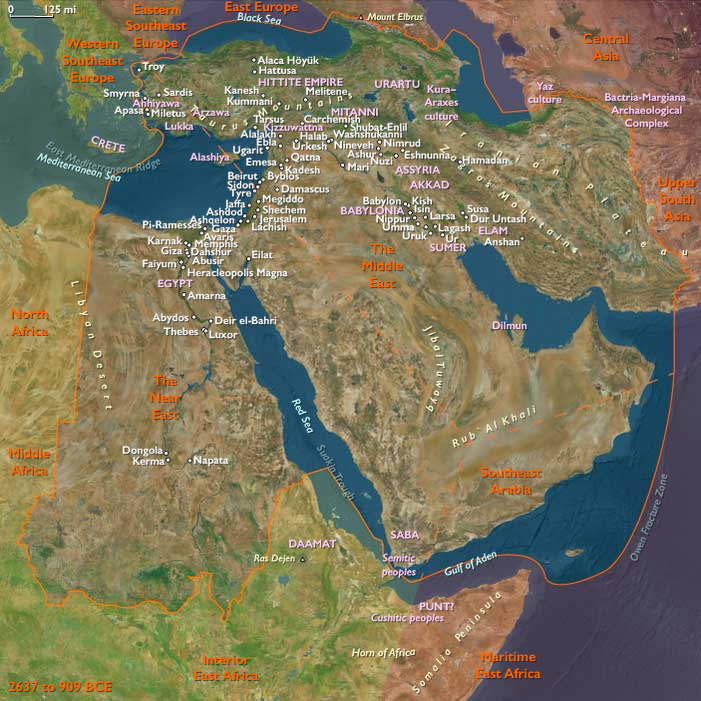
Subregions
Years: 2001BCE - 1990BCE
Locations
People
Groups
Topics
Subjects
Regions
Subregions