The Battle of Valencia de Alcántara – A Daring Preemptive Strike (August 27, 1762)
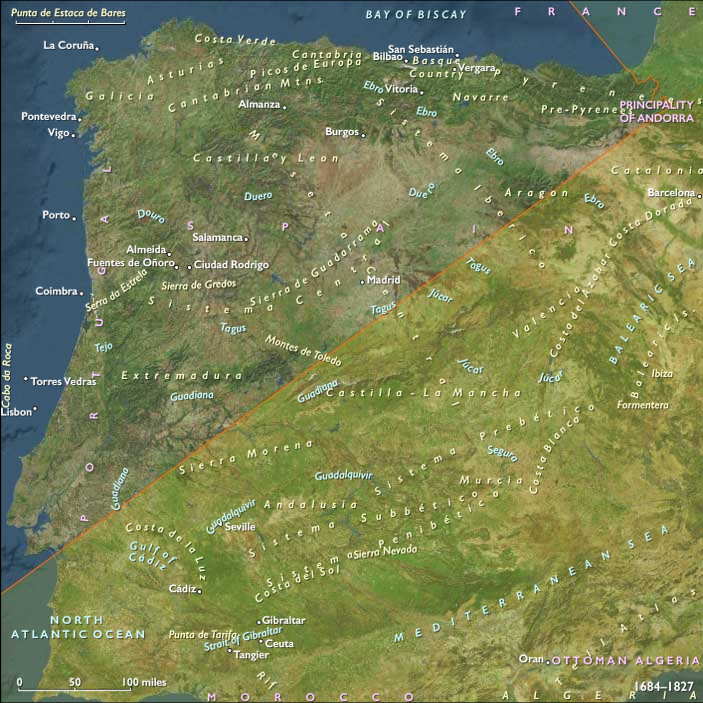
By mid-1762, the Franco-Spanish invasion of Portugal had evolved into three separate campaigns, each aimed at a different strategic region:
- The Northeast Division (Galicia) – Targeted Trás-os-Montes and Minho, with Oporto as its final objective(first invasion, May–June 1762).
- The Central Division (Beira) – Reinforced by French troops and remnants of the Northeast Division, aimed at Lisbon (second invasion, July–November 1762).
- The Southern Division (Valencia de Alcántara, Estremadura) – Positioned to invade Alentejo, a flat and open province, making it an ideal route for a Spanish cavalry advance toward Lisbon.
The Portuguese King Pressures for an Offensive
As the Franco-Spanish army gained momentum in central Portugal (Beira), King José I pressured Count Wilhelm von Schaumburg-Lippe, the Allied commander, to go on the offensive.
Lippe, however, knew that a direct confrontation with the larger enemy army would be disastrous. Instead, he devised a bold preemptive strike—attacking the southern Spanish forces near Valencia de Alcántara, where the Spanish third corps was amassing troops and munitions for another planned invasion through Alentejo.
Valencia de Alcántara – A Key Spanish Supply Depot
The Spanish troops stationed near Valencia de Alcántara were part of the vanguard of Spain’s third invasion force. The city served as:
- A main supply depot, storing munitions and artillery.
- A staging ground for the planned advance into Alentejo, from where Spanish cavalry could move unopposed toward Lisbon.
However, the Spanish commanders believed their numerical superiority made a Portuguese attack unthinkable. As a result, they had failed to set up proper defenses:
- No barricades or advanced piquets.
- Minimal guard patrols, except in the city’s central square.
- Major-General Don Miguel de Irunibeni, the Spanish officer in charge of the Alentejo invasion, had just arrived the day before, unaware of any immediate threat.
Burgoyne’s Lightning Attack – August 27, 1762
On the morning of August 27, 1762, Colonel John Burgoyne, commanding a 2,800-strong Anglo-Portuguese force, launched a surprise assault on Valencia de Alcántara.
Despite the enemy’s larger numbers, the element of surprise and Burgoyne’s tactical boldness led to a decisive victory:
- The Seville Regiment, one of Spain’s elite units, was routed.
- All resisting Spanish soldiers were killed.
- The city was swiftly taken, and the supply depot fell into Allied hands.
Key Spanish Officers Captured
The attack inflicted heavy losses and led to the capture of multiple high-ranking officers, including:
- Major-General Don Miguel de Irunibeni, commander of the planned Alentejo invasion.
- Two colonels, two captains, and seventeen subaltern officers.
- Three Spanish flags, symbolizing a humiliating defeat for Spain.
Additionally, large quantities of arms and munitions were seized or destroyed, crippling Spain’s ability to launch a third invasion.
Strategic Impact – Preventing the Third Invasion of Portugal
The Battle of Valencia de Alcántara was a turning point in the Portuguese defensive campaign.
- It galvanized the Portuguese army at a critical moment, boosting morale during the early stages of the Second Invasion (Beira Front).
- It eliminated the threat of a third invasion through Alentejo, which would have allowed Spain’s powerful cavalry to advance toward Lisbon with little resistance.
- It forced Spain to divert resources away from the central campaign, weakening their overall position.
Burgoyne’s Reward and Legacy
For his brilliant leadership, John Burgoyne was:
- Personally rewarded by King José I of Portugal with a large diamond ring.
- Given the captured Spanish flags as a symbol of honor.
- Internationally celebrated, enhancing his military reputation.
Conclusion – A Masterstroke in the Iberian Campaign
Burgoyne’s daring raid on Valencia de Alcántara exemplified the aggressive defensive strategy employed by Lippe and his Anglo-Portuguese forces. Instead of waiting to react, they struck first, disrupting Spanish plans and ensuring that the Alentejo remained secure.
This decisive action, combined with continued Portuguese resistance, would ultimately contribute to the complete failure of Spain’s 1762 campaign, leading to the final withdrawal of Bourbon forces from Portugal.