
Thomas Hood's The Plea of the Midsummer…
1827 CE
Thomas Hood's The Plea of the Midsummer Fairies (1827) and a dramatic romance, Lamia, published later, belong to this time.
The Plea of the Midsummer Fairies is a volume of serious verse, but Hood is known as a humorist, and the public rejects this little book almost entirely.
Hood was born in London to Thomas Hood and Elizabeth Sands in the Poultry (Cheapside) above his father's bookshop.
Hood's paternal family had been Scottish farmers from the village of Errol near Dundee.
The Elder Hood was a partner in the business of Verner, Hood, and Sharp, and was a member of the Associated booksellers.
Hood's son, Tom Hood, will claim hat his grandfather had been the first to open up the book trade with America and he had great success in new editions of old books.
On the death of her husband in 1811, Mrs. Hood had moved to Islington, where Thomas Hood had a private schoolmaster; leaving his tutor at fourteen years of age, Hood had been admitted soon after into the counting house of a friend of his family.
However, the uncongenial profession affected his health, which was never strong, and he began to study engraving.
The exact nature and course of his study is unclear and various sources tell different stories.
The labor of engraving was no better for his health than the counting house had been, and Hood was sent to his father's relations at Dundee, Scotland.
Here he stayed in the house of his maternal aunt, Jean Keay, for some months and then, after a falling out with her, he moved on to the boarding house of one of her friends, Mrs. Butterworth, where he lived for the rest of his time in Scotland.
In Dundee, Hood had made a number of close friends with whom he will continue to correspond for many years, led a healthy outdoor life, and also became a large and indiscriminate reader.
It is also during his time here that Hood began to seriously write poetry and had his first published work, a letter to the editor of the Dundee Advertiser.
Before long Hood contributed humorous and poetical articles to the provincial newspapers and magazines.
As a proof of his literary vocation, he writes out his poems in printed characters, believing that that process best enables him to understand his own peculiarities and faults, and probably unaware that Samuel Taylor Coleridge had recommended some such method of criticism when he said he thought "print settles it."
On his return to London in 1818, he had applied himself to engraving, enabling him later to illustrate his various humors and fancies by quaint devices.
In 1821, John Scott, the editor of the London Magazine, was killed in a duel, and the periodical had passed into the hands of some friends of Hood, who proposed to make him sub-editor.
His installation into this post had at once introduced him to the literary society of the time; and in becoming the associate of John Hamilton Reynolds, Charles Lamb, Henry Cary, Thomas de Quincey, Allan Cunningham, Bryan Procter, Serjeant Talfourd, Hartley Coleridge, the peasant-poet John Clare and other contributors to the magazine, he had gradually developed his own powers.
He was married in May 1824, and Odes and Addresses—his first work—was written in conjunction with his brother-in-law J. H. Reynolds, a friend of John Keats.
Samuel Taylor Coleridge had written to Charles Lamb averring that the book must be his work.
Locations
People
Subjects
Regions
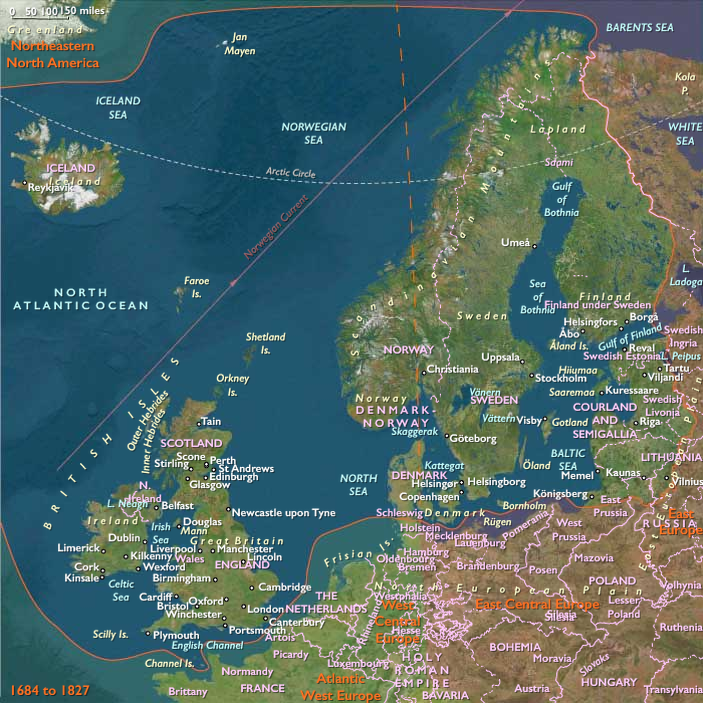
North Europe
View →Subregions
